Maxi dresses for petites: hemline, proportions, and footwear
If you are short and want to wear a long dress, start by adjusting the shoulders, chest, and waist, and then check the hem with the shoes you plan to wear. You don’t need a minimum height or to wear heels. What you need is for the dress to allow you to move, end where you like, and keep its details if it requires alteration.
The word "long" describes a design intention, but it does not indicate where it will end on each person. The same model can fall above the ankle, brush the instep, or get close to the floor depending on your height, proportions, and how it sits on your body. It is advisable to separate two questions: whether you like the dress and whether its construction allows for the adjustment you need.
Total height does not answer all fit questions
Two people of the same height can have different torso and leg lengths. The position of the waist or the height at which the neckline rests can also change. That is why a recommendation based solely on height in centimeters falls short for choosing a specific dress.
Start by locating the points of the pattern you do not want to move: shoulders, seam under the chest, waist, pockets, or the beginning of a slit. If any of these are in an uncomfortable position, shortening the hem will not solve it. It may be more useful to compare another cut than to invest in an alteration that only changes the bottom of the skirt.
When buying online, distinguish between garment measurements and body measurements. A chest contour does not equal a flat width, and an elastic waist does not guarantee that the sleeve has the width you need. The guide on how to check a one-size-fits-all dress explains how to prepare for that comparison.
Before the hem: check the top of the dress
Put the dress on without trying to continuously reposition it and observe where it rests. If the shoulders fall far beyond where you want, if the neckline is lower than expected, or if the waist sits in an uncomfortable area, note it separately. These are different problems and not all are solved with the same adjustment.
In a model with adjustable straps, you can change their position within the intended range, but check the armholes and chest at the same time. Shortening them as much as possible to raise the skirt by several centimeters can alter the upper part. In a dress with sleeves, raising it from the shoulder also requires evaluating the change to the sleeve.
A gathered waist can help maintain a position, although it is worth checking where it actually rests on you. Do not force it to a height that does not correspond to your comfort. If the dress has a marked seam, observe how it relates to your body while sitting as well as standing.
Choose a useful length for the way you wear it
Decide if you want to see your ankle, part of the shoe, or just the toe when walking. Any of those options can be your long dress. The practical criterion is that you can take a normal step and turn without stepping on the fabric or having to hold it up the whole time.
Test it with both shoes, on a clean and level floor. Look at the front, the back, and the sides: the skirt may fall differently in each area. If the dress has a slit, check how it changes when walking and sitting. If it has fringes, tassels, or lace, they count as part of the length.
A useful reference is a dress of yours with a similar cut that already ends where you want. Compare the measurements from the same starting point and without stretching the fabric. You can follow the procedure for how to measure length before buying online, especially if the product description does not clarify where the measurement begins.
Two examples that require different questions
Neel: a published measurement that needs context
The product description for the Neel Long Dress indicates a length of 139 centimeters and describes a gathered elastic waist and a skirt with panels and ruffles. That figure is a guide, but it does not allow you to be sure how it will fit without knowing where it was measured from and without comparing it to a reference garment.
Before deciding, ask about the starting point of the measurement and the position of the waist. If you plan to shorten it, observe how the panels are distributed: removing part of the last ruffle can change its proportion. It is advisable to know the options before choosing it for a specific date.

Cala Salada: evaluate the finish before an alteration
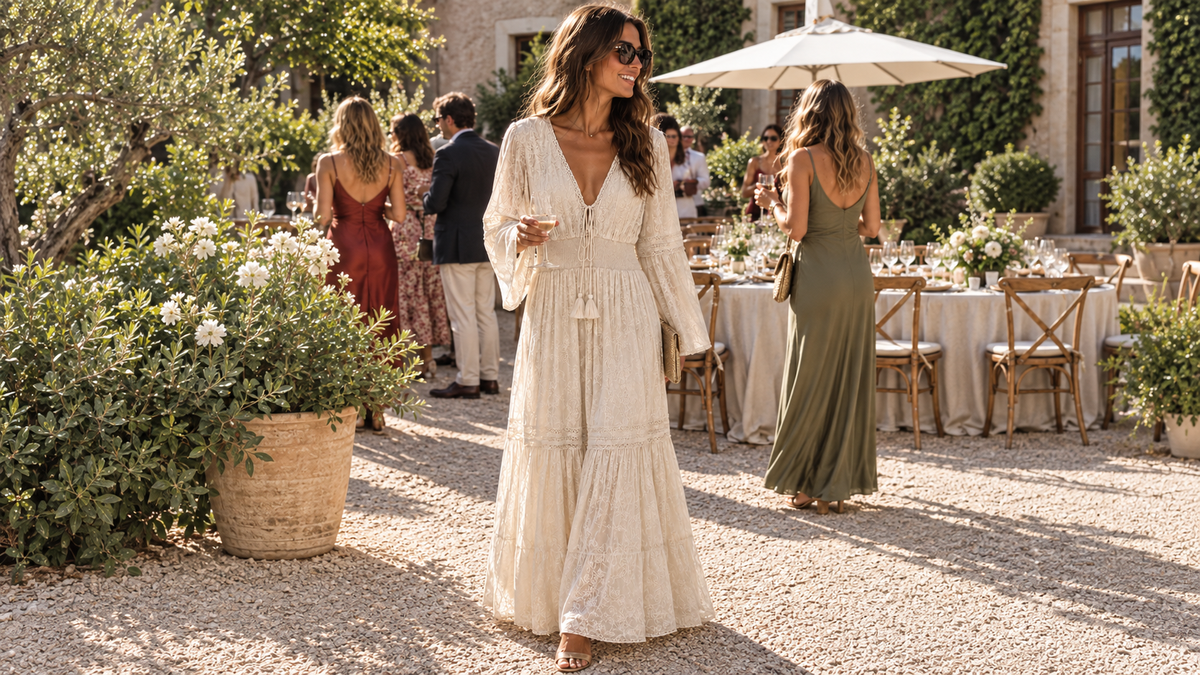
The Cala Salada Dress is described with a flared skirt, borders, and a floral embroidery hem. Here the question is not just how many centimeters are too many, but what part of the design would be preserved by modifying it. The description does not provide a length measurement sufficient to resolve that decision without asking.
Ask for the measurement and, if you need an alteration, show the dress or its details to a professional. There may be different ways to intervene, but not all will be possible or equivalent in cost or result. Do not assume that an elaborate finish can be cut and reattached without altering the design.
Proportions: compare what you like, without rules about your body
If you prefer a continuous line of color, try a dress with shoes and a layer in similar tones. If you like contrasts, a dark jacket over a light dress or a colored shoe can be part of the outfit. You do not need to avoid those differences because of your height.
The size of the print is also a personal choice. Look at the whole dress and observe where the motifs fall: a large one on the skirt, an embroidery concentrated on the chest, or several horizontal bands produce different compositions. None is prohibited for a short person; decide which one you like when wearing it.
With a jacket, try at least two lengths if you have them at home. A short one leaves the waist of the dress visible; a long open one can frame it. Check especially that the sleeves have space and that the hems do not tangle when walking. The layer does not have to follow a formula to "lengthen" the body.
The handbag can relate to the activity. If you need to carry a computer, it makes no sense to choose a tiny one just to meet a proportion rule. Look at where it hangs and whether it covers any detail of the dress. You can change the length of the strap or carry it in your hand when that is practical for you.
Flat shoes, heels, or platforms: decide before the alteration
Choose the footwear based on the plans and how you feel with them. If you are going to wear flat shoes most of the time, prepare the length with them in mind. Reserving the dress for a heel you do not want to wear limits its use and may force you to hold up the skirt when you change.
If you will alternate between two heights, try both before fixing the alteration. You may find a compatible length or prefer to dedicate that dress to one type of footwear. It does not have to be the same distance from the floor in both versions; it just needs to allow you to walk normally in both.
What to ask when consulting an alteration
Bring the intended footwear and explain what detail you want to preserve: lace, a panel, or a slit. Ask them to evaluate the complete fit before marking the hem. An intervention that changes the waist or shoulders can subsequently modify how the skirt falls and how much it needs to be shortened.
Ask for an explanation of the expected result and try on the garment with the provisional marking whenever possible. Look especially at the sides and the back. It is more useful to say "I want to walk in these flats without stepping on the edge" than to ask for a number of centimeters without having checked the drape.
Frequently asked questions
Can a short woman wear very loose dresses?
Yes. Check the top fit and freedom of movement, and choose the looseness you like. Comfort and personal taste provide more information than a prohibition due to height.
Should I always choose a midi dress?
No. A model called midi can become long on you, but you still need to check waist, chest, and measurements. The commercial name does not replace trying it on.
Can I take up the length with a belt?
It can raise the hem somewhat on certain dresses, but it also modifies the folds and the position of the body. If you need to hold it in an uncomfortable way to walk, consult an alteration or compare another model.