How to tell if a dress is see-through: 5 checks
To determine if a dress is sheer, check the outer fabric, the areas that are lined, and how it performs when you put it on. The color or a front-facing photo is not enough to assess coverage. A dress might have openwork sleeves, a covered bodice, and a single-layered hem: check each area separately.
If you are shopping online, the product description and photographs can guide you, but they do not always resolve all doubts. These five checks help you identify what information you need and what to test when you have the garment in front of you.
5 checks to assess transparency
1. Locate openwork and single-layer areas
Observe the neckline, chest, waist, back, sleeves, and skirt. Lace, guipure, or eyelet embroidery may only appear on certain panels. Seeing openwork at the hem does not mean the dress has the same coverage on the bodice, or vice versa.
Zoom in on detail photos and look at the garment from the back. A pose, crossed legs, or the embroidery itself might hide an area you would like to check.
2. Find out where the lining ends
Look for information on which parts are lined, where that layer ends, and whether it is attached to the dress. "Lined" does not necessarily mean full coverage. There might be a lining in the skirt while the bodice or sleeves are left unlined.
Also, check if the slip is included. If the description does not state it, do not assume that the garment appearing underneath in a photograph is part of the purchase.
3. Do a test with ambient lighting
When you are able to try on the dress, wear the underwear you intend to pair it with and observe it in indirect natural light. Repeat the check with the lighting in the room where you get ready, turning around to check the sides and back. A single light source might hide differences between areas.
A test photo can be helpful, but compare it with what you see in the mirror. Camera exposure and screen brightness can change the appearance. Assess the coverage you want for that occasion without depending on a single image.
4. Check the layers while walking and sitting
The lining can shift relative to the outer fabric. Walk, sit down, and stand up to check if it rides up, bunches, or becomes visible through a slit. Also, look at whether the outer skirt opens more than expected when you take a long step.
If you are going to add an undergarment, repeat the test with both layers. An outfit that looks fine while standing still may form folds when you move or pull at the hem.
5. Check the fit and contrast of your underwear
A garment that is too tight can cause buttons to gap, panels to separate, or change how the fabric looks. Compare the measurements with a garment that fits you well and consult this guide to check measurements for a one-size dress.
Try different colors of underwear under the dress. A shade close to your skin tone is usually a good starting point to reduce contrast, but you have to see it with the specific garment. Coverage does not depend on color alone: seams, the cut, and the layers also count.
Two examples: what we know and what you should check
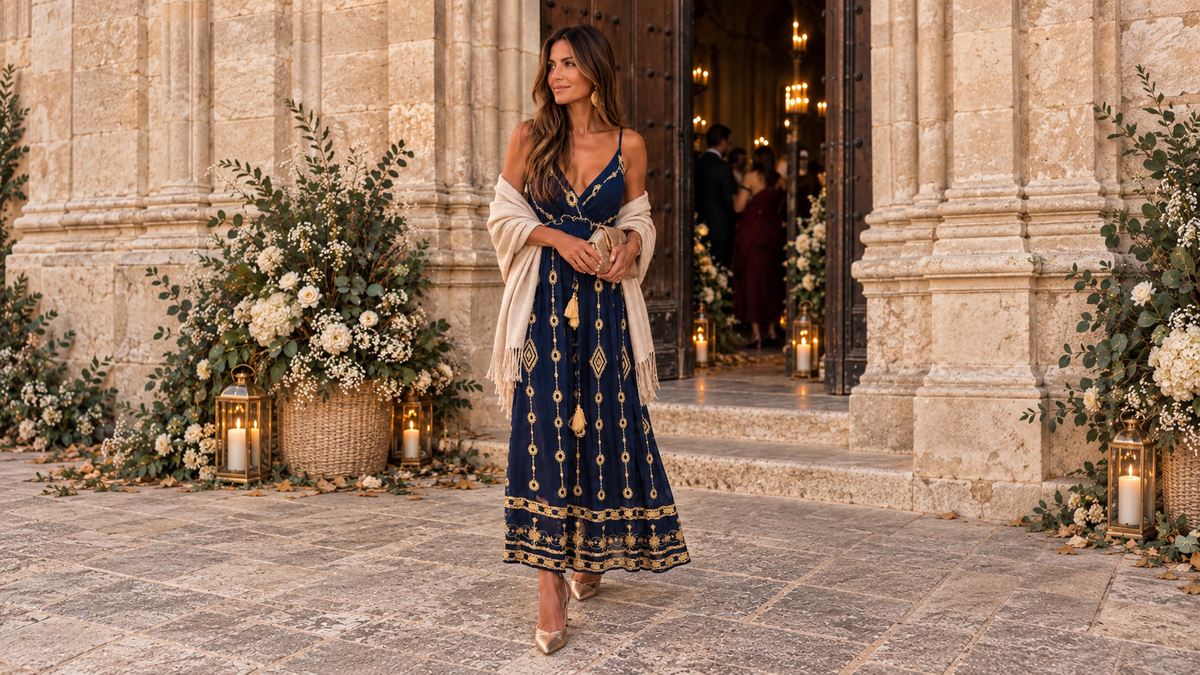
The Cala Llonga Night Dress product page describes die-cut embroidery and guipure trim on the sleeves and hem. These are details of the outer fabric; the description does not specify which areas are lined. If the chest or skirt coverage is important to you, check those points before choosing it.

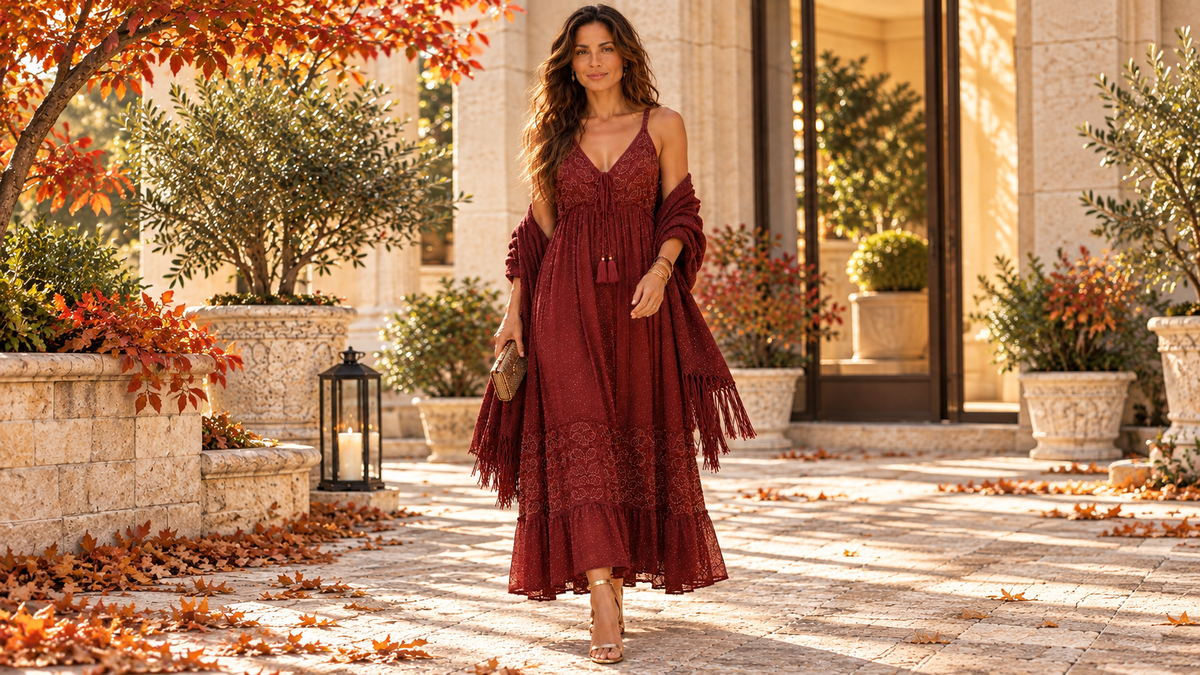
The Aurora Celeste Dress has openwork eyelet embroidery, a V-neckline in the front and back, and an empire waist. Its product page also does not specify the lining. The images allow you to see the design, but they do not prove its opacity in all lighting conditions on their own.

What to ask before buying a dress online
| Your doubt | Information you should ask for |
|---|---|
| I'm not sure if it's lined | Which areas are lined and which ones are sheer |
| The skirt has a slit | Where the lining ends and how it aligns with the slit |
| It seems to have a slip underneath | Whether it's included, if it can be separated, and its length |
| I can't make out a certain area | A detail photo of the inside or that part of the garment |
How to choose a slip if you need another layer
Match the neckline, straps, and length with the areas you want to cover. The slip should not peek out from a slit unless that is the effect you are looking for. To plan for length, use the guide on how to measure a dress before buying it online.
If your question is about the upper part, you can also check what to wear under an openwork blouse. When browsing the Boho collection dresses, review the information for each model; do not assume that all share the same lining or coverage.
Frequently asked questions
Can a black dress be sheer?
Yes. A dark color does not guarantee opacity: the fabric structure, openwork, layers, and lighting all matter. Check the garment while worn.
Does having a lining mean a dress is not sheer?
Not necessarily. Check the lining material, the areas it covers, and where it ends. The word "lined" does not describe all those details.
Is it better to wear white underwear under a white dress?
Not always. White can create contrast with the skin. Try a shade close to your own and check the result with the dress: no color choice replaces checking the actual coverage.