

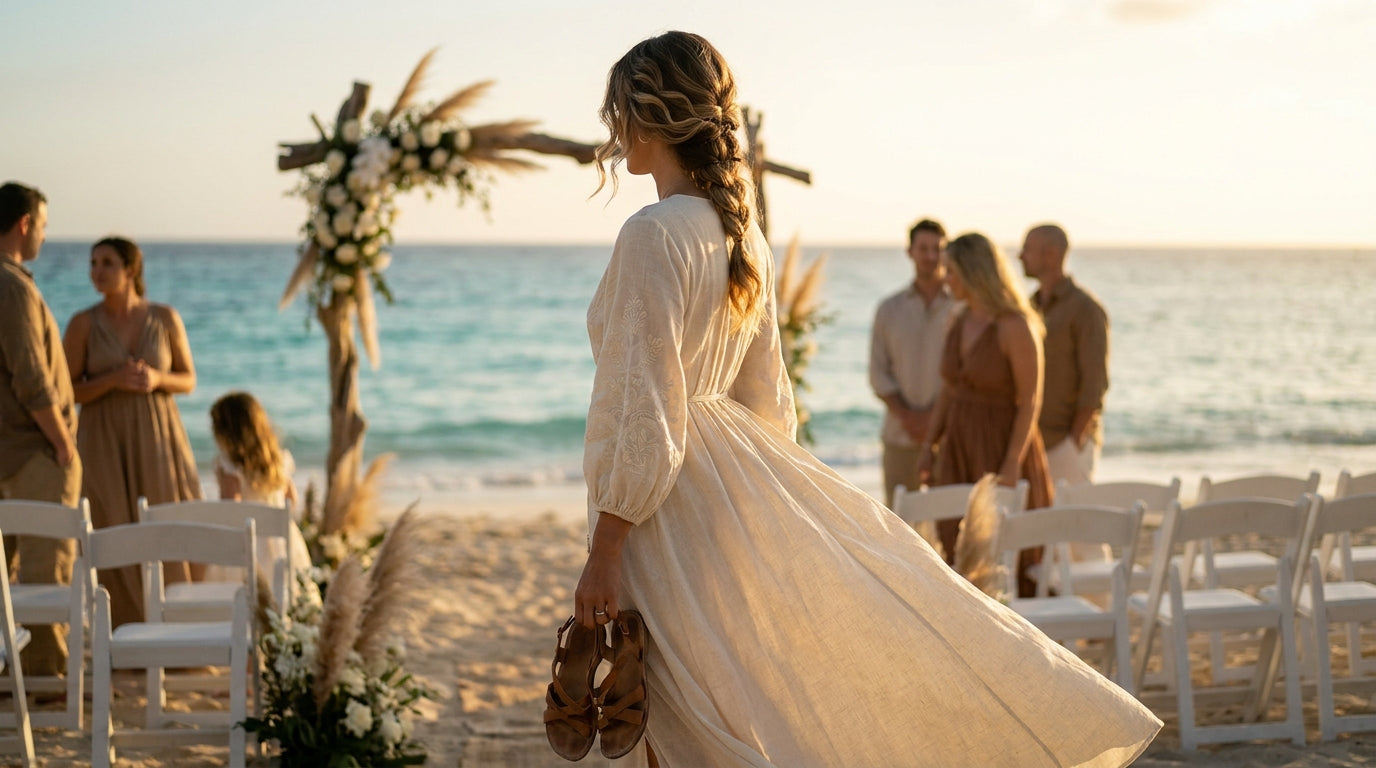
Beach wedding guest dresses (without dying of heat or sinking in the sand)
The 6 real physical problems of a beach wedding, solved one by one · By Martina
IN SUMMARY
• A beach wedding has 6 physical enemies that generic guides ignore: sand (you sink), wind (it moves everything), the tide and humidity, the low afternoon sun (it creates glare in photos), radiant heat, and the thermal drop at sunset.
• The formula that solves all 6: long or midi dress in linen with a natural heavy drape (not extremely airy), flat sandals or low wedges, an updo or half-up style, and a thin wrap for the evening.
• The "Ibicenco" style isn't just about aesthetics for a beach wedding: it's the functional answer. "Adlib" fabrics and cuts were literally born for this environment.
• The number one mistake: buying a dress thinking of the Pinterest photo, not the 7 real hours of sand, wind, and sun you are going to experience.
Of all the wedding formats that exist, the beach wedding is the one with the greatest distance between fantasy and physical reality. The fantasy: you in an airy dress, barefoot on the shore, golden light, everything floating. The reality: sand that burns at five in the afternoon, wind that turns your skirt into a sail, impossible heels, hair in your face throughout the entire ceremony, and a surprising chill when the sun goes down.
I know this because I have dressed dozens of clients for beach weddings (in Ibiza, Formentera, Cádiz, Almería) and because the post-wedding conversations are always the same: nobody complains about the color of the dress; everyone talks about the sand, the wind, and the footwear. The problems of a beach wedding are physical, not aesthetic.
This guide is built differently from the others: instead of starting with "pretty dresses for a beach wedding," it starts with the 6 real physical problems of the environment and builds the look from there. If you solve these 6, the result is also beautiful. If you only chase what is beautiful, the 6 problems will find you.
Problem 1: sand (you sink, it burns, and it gets everywhere)
Sand is the primary constraint and the most underestimated. Three specific effects: thin heels sink completely (walking becomes impossible and the ceremony often involves standing in the sand for 30-45 minutes), the dry sand in the afternoon burns (in July at 5 PM it can exceed 50°C on the surface), and sand sticks to everything that touches the ground.

The footwear solution:
Flat leather sandals or low, wide wedges (the wide wedge distributes weight and doesn't sink). Many beach weddings provide a "barefoot zone" with a wooden walkway for the ceremony: ask the couple if there will be one. If the ceremony is directly on the sand, consider arriving in sandals and going barefoot for the ceremony (this is perfectly accepted at beach weddings). What you should NEVER wear: stiletto heels, rigid platforms, closed-toe shoes.
The length solution:
Counterintuitive but true: a long dress works BETTER than a short one in the sand, as long as it doesn't drag. An ankle-length (not floor-length) hem protects your legs from sand kicked up by the wind and is flattering when barefoot. A dress that drags will pick up kilos of wet sand at the shore. Have it hemmed 2-3 cm above the floor while barefoot: that is the exact measurement for a beach wedding.
Problem 2: the wind (the great uninvited choreographer)
On the coast, there is ALWAYS wind at the end of the afternoon, which is exactly when beach ceremonies are held (the thermal sea breeze is a daily phenomenon, not bad luck). The wind affects three things: the skirt (very airy fabrics will lift), hair (loose hair becomes a curtain over your face just in time for photos), and hats or wide-brim hats (they literally fly away).

The fabric solution:
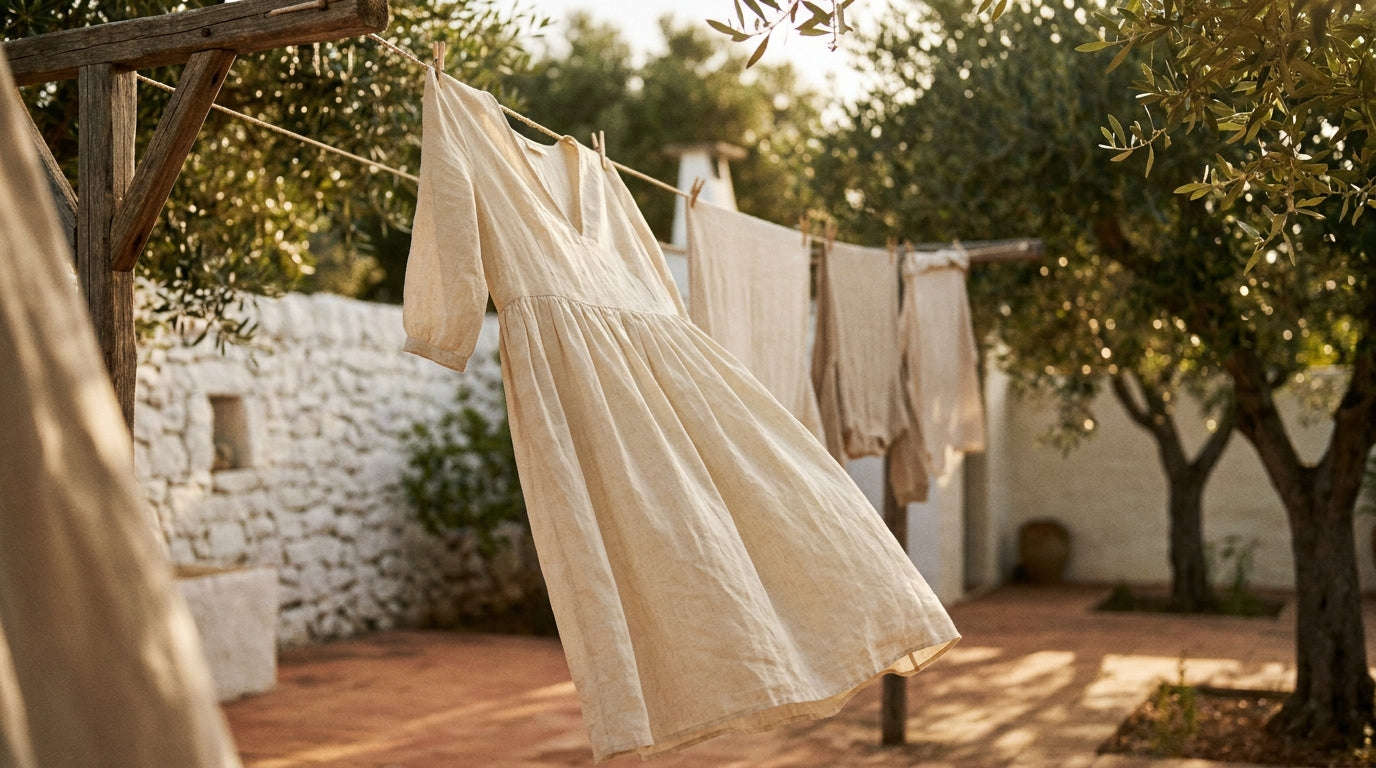
Here is the most important technical nuance of the article: you need a drape WITH weight. Medium-weight linen is perfect: it moves elegantly with the wind without lifting. Ultralight gauze and chiffon (the typical "airy beach dresses" in photos) behave the worst: they stick, they lift, they tangle. Crochet also works very well: its structure has natural weight.
The hair solution:
Updo or half-up style, always. A loose braid, a messy low bun done with care, or a half-up style with waves. Leaving hair completely down at a beach wedding is the decision most regretted when looking at photos. If you want to wear it down for the banquet, pin it up for the ceremony (which is when the wind and the key photos happen) and take it down later.
Regarding wide-brim hats:
At a beach wedding with wind, a wide-brim hat is a real risk. If the ceremony is before 6 PM and the sun is bright, a flexible hat that you can hold or take off works well. The rigid wide-brim hat worn by urban guests does not: you will either be holding onto it all afternoon, or it will fly off in the middle of your "I do."
Problem 3: radiant heat (and its sharp drop at sunset)
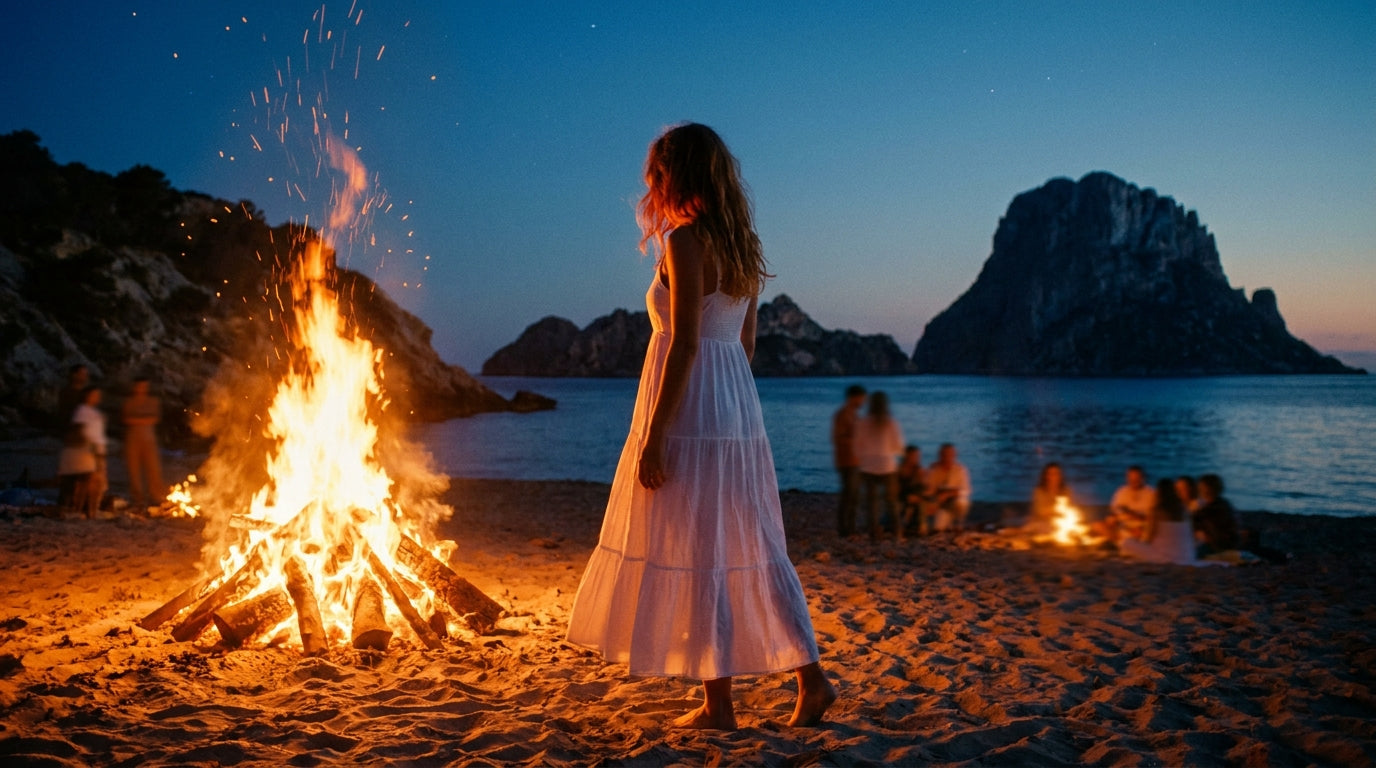
The beach in summer has a double-edged climate of its own: during the ceremony (5–8 PM) the heat is radiant and doubled (direct sun plus the reflection from the sand and water), and as the sun goes down, the temperature drops suddenly by 8-12 degrees, with the sea humidity amplifying the feeling of coolness.

For the heat:
Fabrics that truly breathe (linen, organic cotton), light colors that reflect heat (another reason why the "Ibicenco" white-off-white code dominates beach weddings), an open back or neckline for air, and nothing tight-fitting. Tailored dresses in synthetic fabric are a portable sauna in this environment.
For the nighttime chill:
A thin wrap that fits within the dress code: a light beaded cape, a thin kaftan, or a large linen shawl. Keep it in your bag until 9:30 PM, and from then on, it will be the best investment of the night. Beach weddings end with half the guests wrapped in tablecloths or their partners' jackets: you won't be, because you knew better.
Problem 4: the low afternoon light (the light that makes photos... or ruins them)
Beach ceremonies are scheduled for the "golden hour," which means low, direct, golden sun. It is the most beautiful light of the year for photos, but also the most demanding: it amplifies shine (satins and polyesters look like plastic), shines through thin fabrics (be careful with unwanted transparency when backlit), and warms up tones.
What the golden hour rewards: matte linen, textured crochet, handcrafted raised embroidery, ecru, sand, soft terracotta, and off-white tones. What it punishes: synthetic shine, sequins (they literally create glare in photos), cool-toned optical whites (they look gray when backlit), and thin, unlined fabrics.
The at-home test before the wedding: put on your dress and look at yourself backlit in front of a window with direct sun. What you see there is what the camera will see on the beach.
Problem 5: the tide and humidity (the ground changes during the wedding)
A detail that almost no one considers: the shoreline moves. A ceremony set up 10 meters from the water at 6 PM may have the tide only 4 meters away by 8 PM. And even if the water doesn't reach you, the sand near the shore is damp and compact: it stains the hems of dresses that drag with a ring of dampness and salt that isn't easy to remove.
Simple solutions: hem 2-3 cm off the ground (I insist because this is the measurement that solves three problems at once), fabrics that recover from humidity (linen dries quickly without leaving a permanent ring; silk does not), and during the banquet, choose a seat away from the damp line if the table is on the sand itself.
Problem 6: the 7 real hours (from the ceremony to the dance floor)
A full beach wedding lasts as long as any other wedding: 7-9 hours. But unlike a ballroom wedding, the environment here physically tests you the entire time: walking on sand, standing on uneven surfaces, intermittent wind, temperature changes. The look has to be designed for hour 7, not hour 1.
The mental test I give my clients: imagine it's 2 AM, you've been in that look for 8 hours, you're dancing barefoot on the sand with your cape on. Does it still work? If the answer is yes, it's the right look. If the answer is "well, by then I'll be uncomfortable," keep looking.
The complete look that solves all 6 problems
Look for afternoon ceremony + beach banquet:
Long dress (ankle-length, not floor) in medium-weight ecru linen with handcrafted embroidery on the neckline and sleeves. Tan leather flat sandals that are easy to take off. Half-up style with waves and controlled strands. Unique statement earrings (the wind and updo show them off). Small wicker or jute bag with a thin wrap inside. Resistant makeup with sun protection, coral lip. No wide-brim hat; only a flexible hat if the ceremony is before 6 PM.

Look for a more formal beach wedding (elegant beach bar or beach club):
Long dress in linen-silk in sand or soft terracotta with subtle sewn-on beading (not sequins). Low, wide-heeled wedge in distressed leather. Polished low updo. Small natural leather clutch. A light beaded cape for the night, which here also works as a statement piece. This is the version that adds presence without sacrificing functionality.
Practical guest look (informal beach wedding):
Midi crochet or off-white linen dress, Roman flat sandals, loose side braid, small earrings, jute bag with a thin kaftan inside. The most relaxed version of the code, perfect for shore weddings with a casual dress code.

The pieces in our catalog designed exactly for this environment (medium-weight linen, raised embroidery, ankle lengths) are gathered in our collection of dresses for Ibiza weddings, which works just as well for a wedding in Formentera as it does in Cádiz or Almería. And the thin wrap that saves your beach night is found in our beaded capes: the most rewarding piece in your entire beach wedding wardrobe.
Frequently asked questions about beach wedding dresses
Is a long or short dress better for a beach wedding?
An ankle-length dress (2-3 cm above the floor while barefoot) is the best option: it protects you from sand kicked up by the wind, is flattering while barefoot or wearing flat sandals, and doesn't pick up damp sand like one that drags. A midi dress is the second-best option. Short dresses only work at very informal beach weddings.
What footwear should I wear to a beach wedding?
Flat leather sandals or low, wide wedges. Stiletto heels sink into the sand and turn the ceremony into an ordeal. Many beach weddings have wooden walkways or barefoot zones: ask the couple. Going barefoot for the ceremony is perfectly accepted at beach weddings.
Which fabric is best for a beach wedding?
Medium-weight linen: it breathes with radiant heat, has a weighted drape that behaves well in the wind, looks perfect under the golden light of the sunset, and recovers from humidity without leaving rings. Crochet is the second-best option. Avoid ultralight gauze (they lift in the wind), satins, and synthetics (they shine poorly in photos and do not breathe).
How should I wear my hair at a beach wedding?
Updo or half-up style, always. There is wind on the coast at sunset (the thermal sea breeze is a daily occurrence) and loose hair ends up in your face exactly during the ceremony and photos. Loose braid, messy low bun, or half-up style with waves. If you want to show it off loose, do it at the banquet, not the ceremony.
Can I wear a wide-brim hat to a beach wedding?
Better not to. Coastal wind turns a rigid wide-brim hat into a problem: either you hold it all afternoon or it flies away. If the ceremony is before 6 PM and the sun is intense, a flexible straw hat that you can take off works. From sunset on, no hat.
Will I be cold at a beach wedding at night?
Yes, almost certainly: when the sun goes down, the temperature by the sea drops 8-12 degrees and the humidity amplifies the feeling. Always bring a thin piece of outerwear that fits the code: a light beaded cape, a thin kaftan, or a large linen shawl. It takes up little space in your bag and makes the difference between staying until the end or leaving at midnight.
Which colors work best for a beach wedding?
Ecru, sand, off-white, soft terracotta, and light earth tones: they reflect heat, look perfect under the golden light of sunset, and connect with the surroundings. Always check if the bride allows white (it is usually accepted in Ibizan-style beach weddings). Avoid optical bluish whites (they look gray against the light) and saturated dark colors (they absorb radiant heat).
About the author
Martina is the founder of Martina Ibiza, a contemporary Adlib fashion brand based in Spain. She has spent years working with family-run workshops in Ibiza and the Peninsula to create handcrafted dresses in linen, crochet, and hand embroidery, staying true to the authentic Adlib code. Here, she shares what she continues to learn about the craft.
Recommended links Martina Ibiza
Explore guest dresses for weddings and events; you may also be interested in the Granada Dress; and complete your reading with our guide on what to wear to a wedding in Ibiza.
,%20wind%20(it%20moves%20every...)