What to wear in Marbella in summer: 7 real day-to-night looks
How to dress in Marbella with Mediterranean taste, not tourist style · By Martina
IN SUMMARY
• Marbella has five distinct settings in summer: the Old Town, the seafront promenade, Puerto Banús, coves and beach clubs, and dinners at estates. Each requires a different code.
• The formula that always works: natural fabrics (linen, crochet, cotton), a palette of white and earth tones, flat or wedge footwear, restrained accessories.
• The most common mistake isn't dressing too much, it's dressing like a tourist: sparkles, synthetics, excessive logos, accessories from tourist bazaars. The true Marbella local dresses with restraint.
• The elegant Marbella local (the lifelong resident) and the international Marbella local (the new wave) dress differently but share the same principle: discretion and quality above noise.
I have a client named Lucía who has lived between Madrid and Marbella for twenty years. I met her because she wrote to me one August asking for help with her wardrobe: "I've been coming for two decades and I still don't know what to wear each day. I end up improvising and I always feel either too much of an outsider or too much of a local when I want to be somewhere in between." It's the best description of the Marbella dilemma I've ever heard.
Because Marbella is a strange place. It is more sophisticated than it looks and more relaxed than they say. It is the only Spanish city where you can run into a Saudi sheikha in a Dior-designed burka on a terrace, a Scandinavian businesswoman in a sports bikini, a woman from Madrid in a boho dress, and a lifelong Marbella resident in a caftan that has more craftsmanship than most shops. And each one is perfectly "on code" for her context.
Dressing well in Marbella in summer isn't about dressing the same as everyone else. It's about dressing to the code of the time of day and the place. This guide breaks down the seven main settings and proposes a real look for each one, with Mediterranean taste and without falling into the "tourist look."
The most common mistake in Marbella in summer: dressing like you're in an ad
Before getting into the looks by setting, it's worth identifying the most recognizable mistake. The one who dresses poorly in Marbella is not the underdressed woman (on the coast, the underdressed go unnoticed). It is the overdressed woman trying to look like "Costa del Sol luxury."
 Comparison of two women in Marbella: one with an overloaded tourist look and another with a restrained Mediterranean look
The "Marbella ad" aesthetic seen on Instagram has very specific codes: glitter at high noon, colorful satins, stiletto heels on the seafront, a designer bag with a huge logo, giant sunglasses with reflective lenses, ostentatious jewelry, temporary henna-style tattoos on the wrists. Each element individually might have its place, but together they produce the effect of "trying to look like Marbella instead of being in Marbella."
The authentic Marbella local, whether a lifelong resident or international, dresses exactly the opposite: matte natural fabrics (linen, cotton, fine silk), a neutral Mediterranean palette (white, ecru, beige, terracotta, sage), functional accessories (flat sandals or low wedges), a single standout jewelry element (or none at all). Discretion that is noticeable because it is different. The mental rule: if you are going to be photographed for Instagram, it's not Marbella. It's the Instagram version of Marbella.
Scenario 1: Old Town (Plaza de los Naranjos, dining, shopping)
Marbella's Old Town is the most Mediterranean setting in the city. Cobblestone streets, white houses with flowers, terraces in squares, small shops, charming restaurants, locals mixing with tourists. It is where the well-executed Ibiza/Mediterranean style works best.
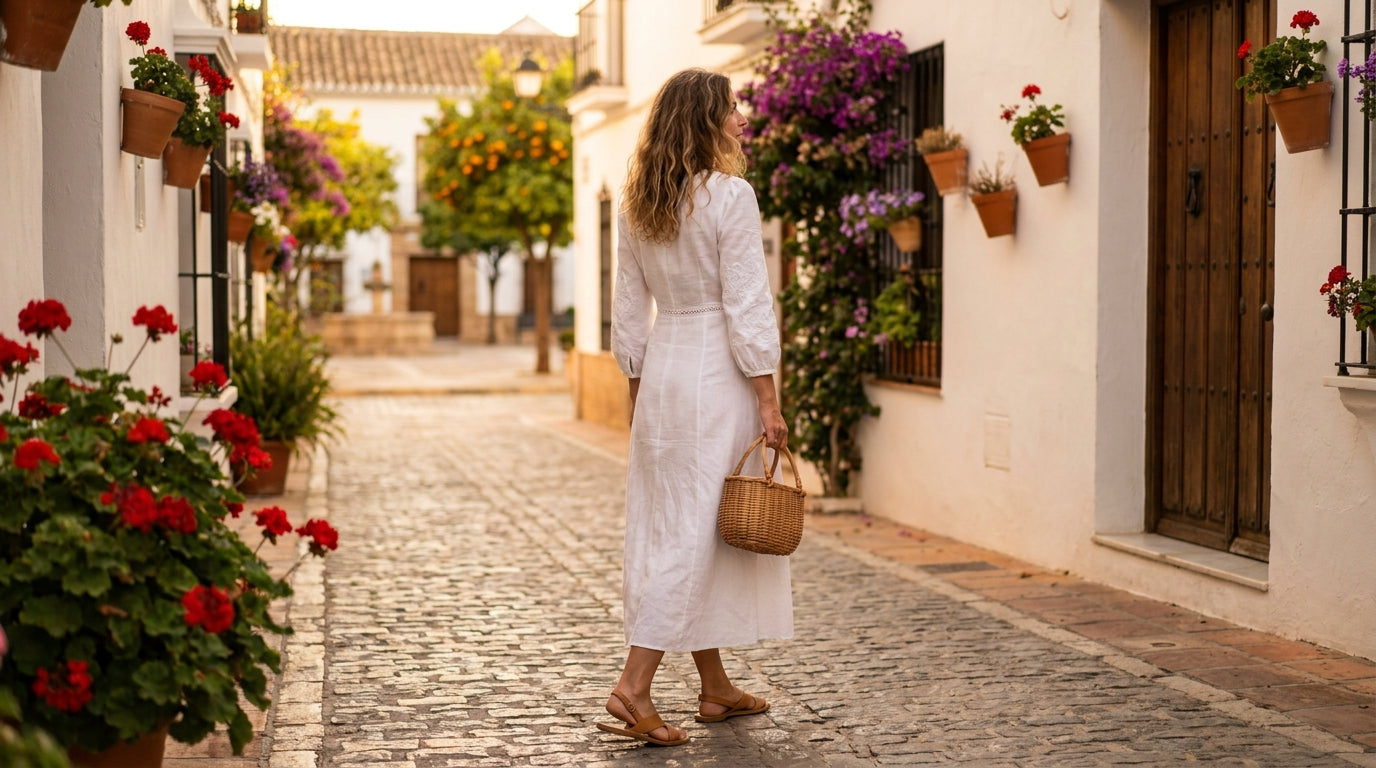
 Woman in a linen midi dress in Marbella's Plaza de los Naranjos
Ideal look for the Old Town:
Midi dress in ecru or white linen with subtle embroidery, flat tan leather sandals, small wicker bag, small earrings in aged gold, hair worn down with natural texture. If the sun is strong (which it is from 12:00 PM onwards), a wide-brimmed Panama-style straw hat.
What does NOT work in the Old Town:
Heels (the streets are cobbled, there are inclines, you will twist an ankle), satin in the middle of the day, visible beachwear (cover your bikini if you're coming straight from the cove), shiny accessories. The Old Town visually punishes you if you overdo it.
Scenario 2: Seafront promenade and Avenida del Mar area
The Marbella seafront promenade, especially between the Old Town and Puerto Banús, is a mixed tourist-local area. There are ice cream shops, terraces, people walking their dogs, runners in the morning, families in the afternoon. It's a more relaxed daytime area.
Ideal look for the seafront promenade:
Short linen or organic cotton dress, flat canvas espadrilles, classic tortoiseshell or discreet gold sunglasses, small crossbody bag in natural fabric or aged leather. If it's morning or afternoon, no hat. If it's evening, a thin linen cardigan for when it cools down.
Variation for morning sports:
If you are going for a morning sports walk, wear discreet sportswear (gray, beige, white) plus a visor. Marbella has a morning runner culture that respects discreet-sporty wear. Options from brands like Lululemon or Sweaty Betty work visually on the promenade, not those with flashy logos.
Scenario 3: Puerto Banús (terraces and areas for seeing and being seen)
Puerto Banús is a different code. Here, the level of presence does rise. It is the international area, the docked yachts, the designer terraces, the restaurants with prices nowhere near the rest of Marbella. Here, the elegant Marbella local does dress to stand out, but with judgment.
 Woman in an elegant linen dress on a terrace overlooking the yachts of Puerto Banús
Ideal look for Puerto Banús by day:
Top + midi skirt set in white or ecru linen, medium-height wedges in tan leather or aged gold, more statement sunglasses (larger format or color), medium natural leather bag, more visible earrings. Makeup goes up a notch: luminous skin, nude golden shadows, coral or rosy nude lipstick.
Ideal look for Puerto Banús at night:
Midi or long dress in fine silk, linen blend, or intricate crochet. White, ecru, or soft terracotta tones. Sandals with medium heels (4-6 cm), small clutch bag in a natural color, jewelry in aged gold or oxidized silver. Hair with a more groomed style: worked waves or a low updo with loose strands. This is a formal dinner context.
What to avoid in Puerto Banús:
Although the "level rises," avoid: satin dresses with daytime glitter, sandals with extreme platforms, bags with huge logos (the current international Marbella code values recognizable brands but without visible logos), very intense perfumes that disrupt the atmosphere.
Scenario 4: Coves, beaches, and beach clubs
Marbella has coves and beaches with a relaxed but not careless code. The difference between a woman "at a classy beach club" and a "tourist at a beach club" is noticeable from 5 meters away.
 Woman with a white caftan and natural bikini walking along the sand of a cove in Marbella
Ideal look for beach-beach club:
Bikini or swimsuit in natural colors (white, beige, earth, terracotta, sage) under a fine white or ecru caftan, flat espadrilles or flat leather sandals, large beach bag in jute or natural rattan, classic sunglasses, wide straw hat for the sun. Brands like Eres, Hunza G, Calzedonia, or Faithfull the Brand work well here visually.
To go from the beach to the beach club without changing:
Keep a short linen or crochet dress in your bag, put it on over your bikini when leaving the water, put on your sandals, and enter the beach club without looking like you've just come from the sea. It's the most useful trick of the Marbella summer.
What does NOT work in beach clubs:
T-shirts with slogans or flashy logos, plastic flip-flops (espadrilles or flat sandals are always a better option), heavy daytime makeup, excessive jewelry that gets lost in the sand.
Scenario 5: Dinners at estates or destination restaurants (Marbella Club, Puente Romano, La Cabane)
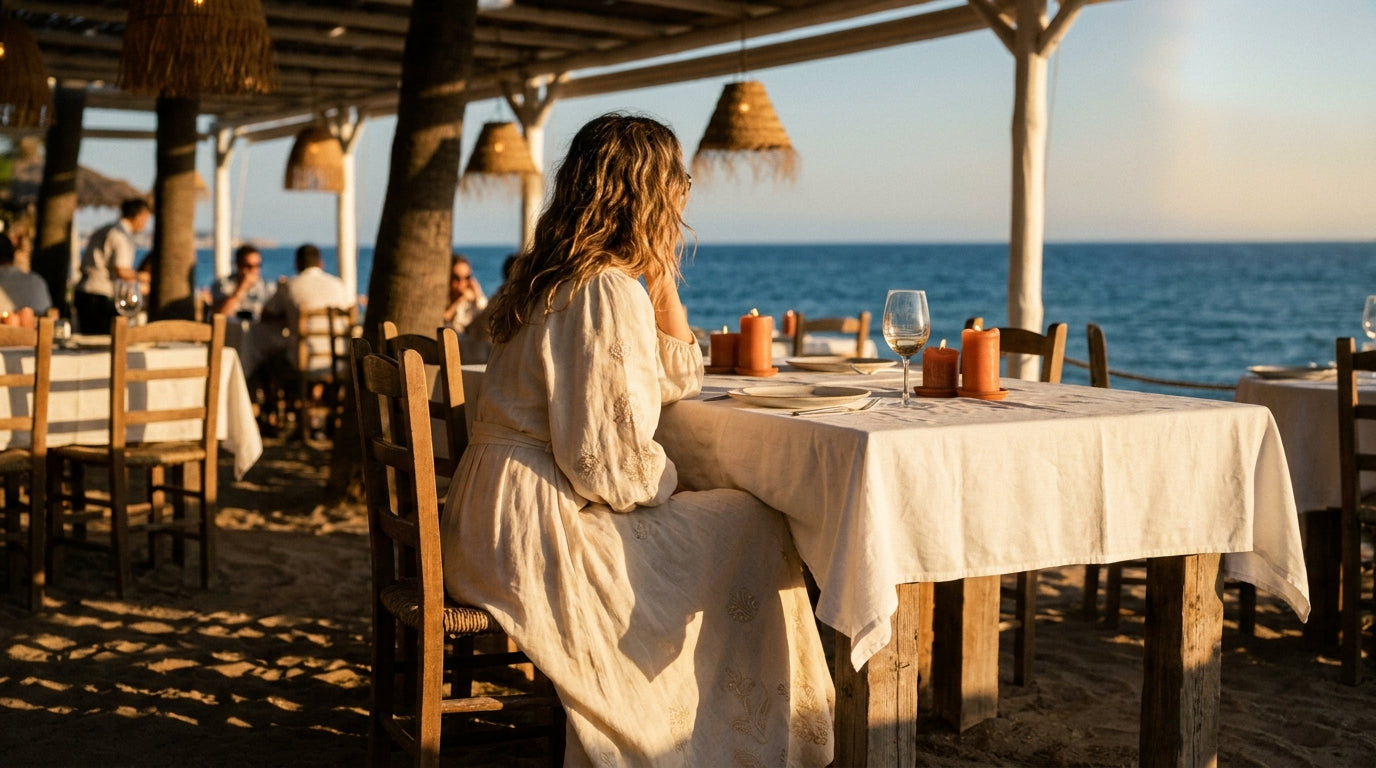
Dinners at destination restaurants or private estates (Marbella Club, Puente Romano, La Cabane, Trocadero) have their own code. It's the Marbella version of the elegant ad-lib: restrained but with presence.
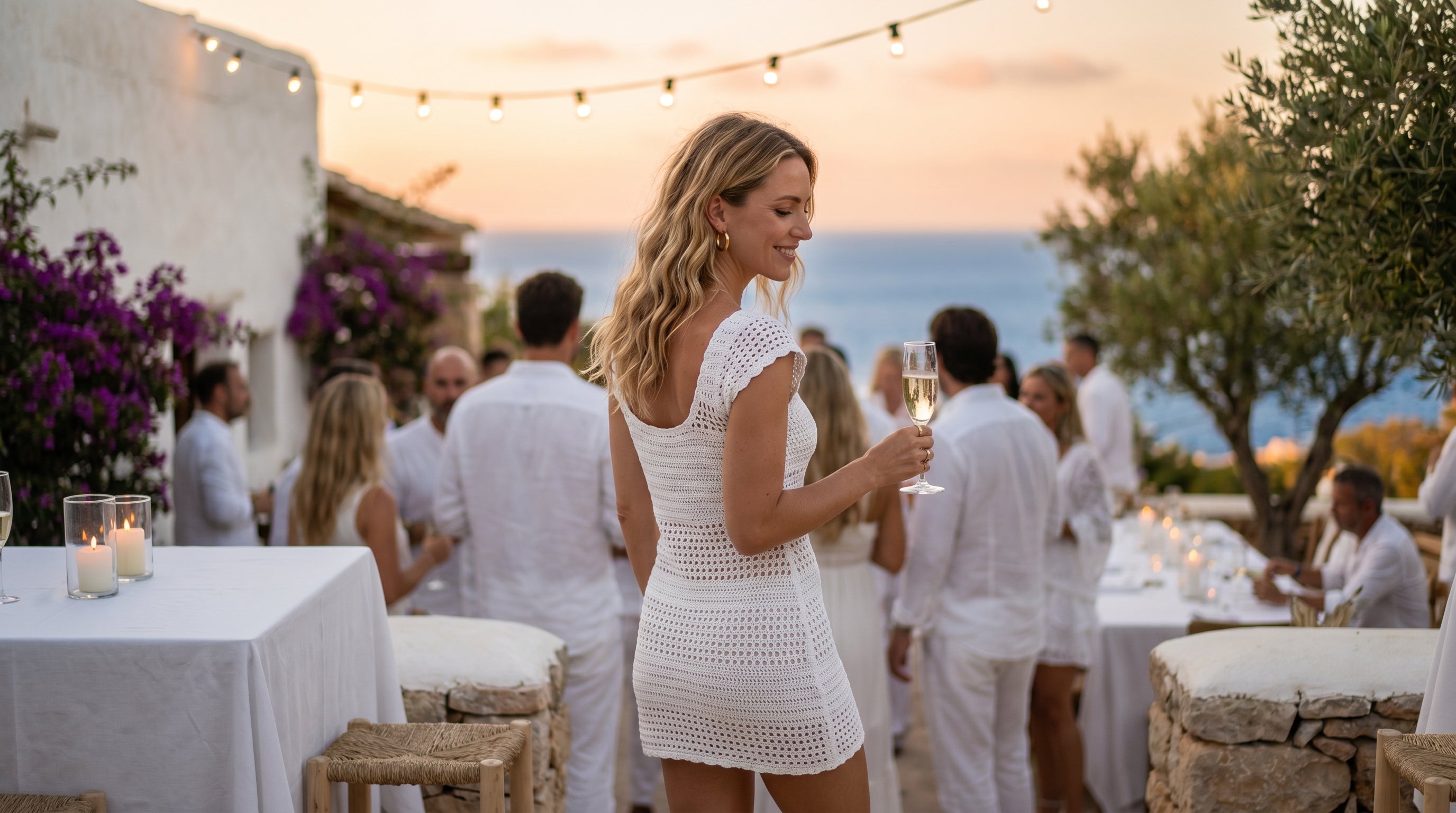
 Woman in a long silk dress at an outdoor dinner at a Marbella estate at sunset
Ideal look for destination dinner:
Long dress in fine silk, linen, or crochet with artisanal embroidery. White, ecru, warm beige, or soft terracotta tones. Elegant flat sandals or low square heels, small natural leather bag, statement jewelry (a single element, not multiple). Makeup in gold and nude tones, hair with natural texture (waves, casual half-up style).
The hair rule:
In Marbella, dinner, especially in establishments like Marbella Club, values hair with slightly worked natural texture. It's not a formal wedding (salon hair) nor a casual dinner (just-washed hair). It's the middle ground: styled but with a "I just woke up like this" air.
A week in Marbella: 7 looks for 7 real scenarios
If you are coming to spend a week in Marbella in August and want to have your wardrobe sorted without packing three hundred pieces in your suitcase, this is the concrete proposal.
 Capsule wardrobe for a week in Marbella: dresses, caftan, top, skirt, and accessories
-
MONDAY (walk and meal in Old Town): Ecru linen midi dress with small embroidery + tan flat sandals + small wicker bag + fine earrings + Panama hat.
-
TUESDAY (morning beach + afternoon promenade): Neutral bikini underneath + short white caftan + espadrilles + jute beach bag + classic sunglasses. For the afternoon, same bikini + short organic cotton dress + crossbody bag + flat sandals.
-
WEDNESDAY (dinner at destination restaurant): Long ecru linen dress with embroidered detail + elegant leather-colored flat sandals + small leather bag + a pair of statement earrings + gold makeup.
-
THURSDAY (shopping in Puerto Banús + aperitif): White linen top + beige crochet midi skirt + medium wedge sandals + medium leather bag + large sunglasses + coral lipstick.
-
FRIDAY (full day at a cove): Beige swimsuit + long white linen caftan + XXL straw hat + large jute bag + espadrilles + discreet sunscreen in a small bag.
-
SATURDAY (dinner at private estate or party): Long crochet or linen dress with all-over embroidery + sandals with medium square heels + small natural-colored clutch + fine stacked bracelets (no more than 4) + night makeup in earth tones.
-
SUNDAY (brunch + closing walk): Short linen or lightweight cotton dress + flat espadrilles + classic sunglasses + small wicker bag + hair worn loose.
With seven main pieces (3 dresses + 1 caftan + 1 top-skirt set + counted accessories) you have the week sorted. And if the star piece (the Wednesday or Saturday dress) is of good quality, it will last you for years of Marbellas.
If you want to see the dresses from my catalog that work best for a week in Marbella, they are all in the Ibiza-style dress collection. Most are pieces in linen and crochet with artisanal embroidery, within the Mediterranean code that Marbella respects. And if the Saturday dinner calls for something more statement, the Atelier pieces are the ones that best respond to that moment.
Frequently asked questions about dressing in Marbella in summer
What is the difference between Marbella and Puerto Banús when it comes to dressing?
Marbella (Old Town, promenade, residential areas) has a more relaxed Mediterranean code: natural fabrics, neutral palettes, understated accessories. Puerto Banús steps it up a notch: more presence, more visible accessories, footwear with a bit more heel. But both respect the same principle: discretion and quality over ostentation and logos.
Can I wear heels in Marbella?
Yes, but with good judgment. For the Old Town and the promenade, flats or low wedges are better due to the cobblestone streets. For Puerto Banús, destination dinners, or parties, 4-6 cm block heels work well. Extreme stilettos should be reserved for very specific events. Marbella values a woman who can walk without suffering.
Does the Ibiza style work in Marbella?
Perfectly. Marbella and Ibiza share much of the Mediterranean code (linen, whites, craftsmanship, embroidery). The differences are subtle: Marbella allows for a bit more leather, more frequent heels, and slightly more visible accessories in Puerto Banús. But the bulk of the wardrobe is perfectly interchangeable between the two.
What should I avoid on a first visit to Marbella?
Avoid "Marbella commercial" looks with lots of sparkles, colorful daytime satins, stiletto sandals on the promenade, bags with huge logos, and very intense perfumes. Authentic Marbella dresses with restraint. The "show-off" aesthetic grabs attention but labels you as a tourist.
How should I dress for Tibu, Pangea, or Olivia Valère?
Marbella's nightclubs (Tibu, Pangea, Olivia Valère, Suite) call for a night look with presence. Short or midi dresses in high-quality fabrics (not shiny fast fashion), comfortable heels for dancing, visible but not excessive jewelry, and nighttime makeup in earth-gold tones. Avoid pure, stark whites (fine for white parties, but not for general clubbing): ecru and aged terracotta work better in a club setting.
What do I wear if I have dinner at Marbella Club or Puente Romano?
These destination hotels have an understated yet sophisticated code. A long dress in silk, linen with embroidery, or intricate crochet. Elegant flat sandals or a low block heel. Small handbag. Discreet but present jewelry. Polished makeup in gold tones. It is the middle ground between a formal wedding and a casual dinner.
How can I adapt my wardrobe if I live in Madrid?
The main difference is the palette and the fabric. If you usually wear more urban tones (gray, navy, black), in Marbella replace them with white, ecru, beige, and terracotta. If you wear heavy fabrics (wool, heavy viscose, satin), swap them for linen, organic cotton, crochet, and fine silk. The cuts can be similar; what changes are the palette and the materials.
About the author
Martina is the founder of Martina Ibiza, a contemporary Adlib fashion brand based in Spain. She has spent years working with family-run workshops in Ibiza and the mainland to create artisanal dresses using linen, crochet, and hand-embroidery, staying true to the authentic Adlib code. She shares here what she continues to learn from the craft.
Recommended links for Martina Ibiza
Explore our Boho Collection; you might also be interested in the Ibiza Collection; and complete your reading with the Talamanca Dress.