What to wear to the theater in autumn: 4 looks based on the plan
To go to the theater in autumn, choose an outfit that allows you to sit comfortably, move around without watching your hemline, and easily remove your outer layer. Trousers with a blouse, a simple dress, or an embroidered jacket can solve the plan. The level of formality depends on what you feel like and the specific instructions for the event, if any.
The performance takes up only part of the outing. You might be arriving from work, stopping by a café beforehand, or have booked dinner for afterward. Think about that entire sequence before choosing shoes and a bag. That way, you won't have to improvise a change that you can't store or carry around with garments you will barely use.
Before you decide: tickets, commute, and sitting time
Consult the information for the theater and your session. A premiere with an invitation may include different guidelines than a regular performance; do not deduce requirements based on the building, the ticket price, or the genre of the play. If there is no specific indication, you can focus on your preferences and the day's needs.
Then, figure out the commute. Twenty minutes of walking, stairs, and public transport change your choice of footwear compared to a short car ride. Check the local forecast and prepare an appropriate outer layer. A decorative jacket can be part of the indoor look without assuming it will also handle the cold or rain outside.
Finally, do a "sitting test" with the complete outfit. Observe if the belt presses, if an embellishment sits against your back, or if the skirt needs to be constantly readjusted. You can enjoy an elaborate embroidery while also ruling out a combination that feels uncomfortable for a long period.
1. Afternoon performance and walk: blouse with straight-leg trousers
If the theater is part of an afternoon stroll, start with straight-leg trousers you have already worn comfortably and familiar flat shoes. Add a blouse that brings detail near your face and a small-sized bag. The difference compared to an everyday outfit can lie in that one special piece.
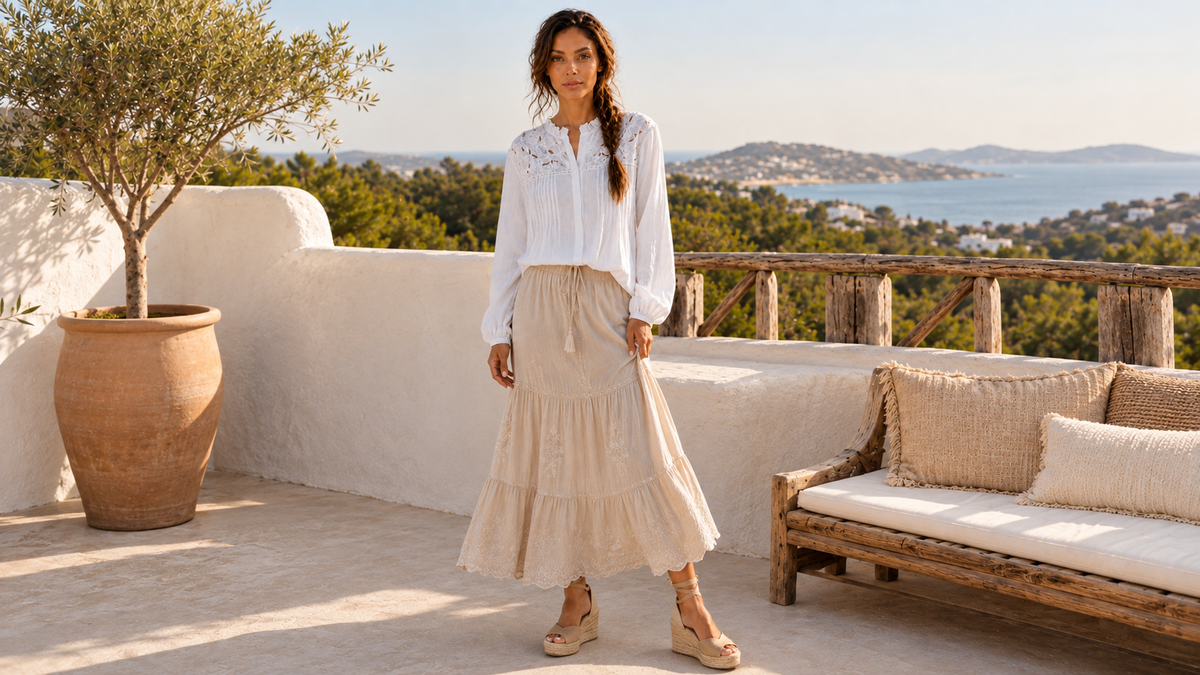
The Azahar Blouse allows for this combination with dark jeans or plain trousers. Its product page describes a central button placket, a guipure yoke, and balloon sleeves. Check the coverage you prefer under the openwork and test the space those sleeves need inside your coat.

To finalize it, try dark blue trousers, a white blouse, and brown shoes. A brown or blue bag can keep the combination focused on the blouse, although you don't need to match every shade. If the walk is long, the priority will be for the footwear to feel comfortable throughout the journey.
This proposal also works if you want to avoid a huge difference between your daytime clothes and your theater attire. You can skip additional jewelry or choose small earrings. The outfit remains finished without depending on heels, a party bag, or a garment you will only use during the performance.
2. Theater and dinner: plain base with an embroidered jacket
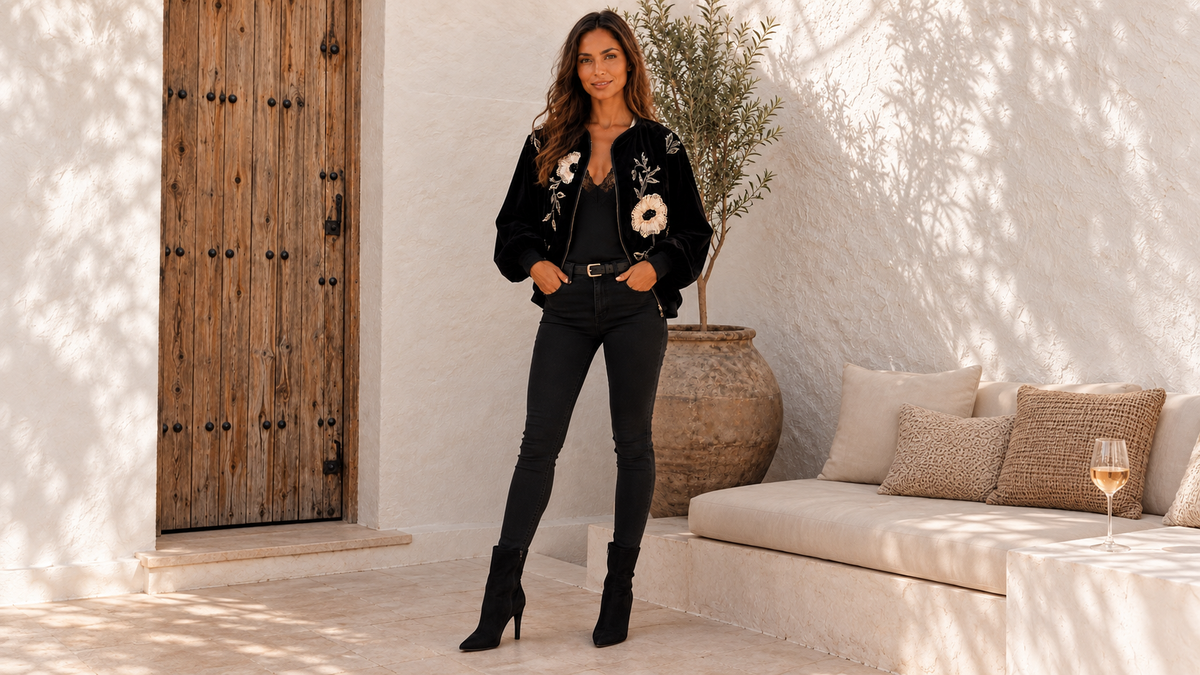
When there is a dinner afterward, a jacket with detail can bridge both moments. Prepare a base of black trousers and a plain top, or a simple dress whose proportions you like. The jacket changes the presence of the outfit and allows you to adjust how much prominence you want it to have upon arriving at the restaurant.
The Lotus Flower Jacket has a bomber cut, a zipper, and floral embroidery on a black base, according to its product page. You can combine it with a base of the same color to focus attention on the top. Check where the hem sits when you sit down and how it falls when open.
If you choose a dress, check that the zipper and the ribbing do not snag or bunch up the fabric underneath. If you choose trousers, test the waistband with the jacket closed. The outfit must also work without it, because you cannot take the temperature you will find in the theater or during dinner for granted.
A small bag can accompany you, provided it fits what you need for the outing. Phone, keys, and glasses take up real space: put them in before you decide. The guide on choosing a bag for dinner helps review capacity and closure instead of choosing just by the photograph.
3. Straight from the office: keep the base and change a detail
If you are leaving work with little time to spare, don't build a second complete look. In the morning, choose a base suitable for your workday and the subsequent plan. Dress trousers with a shirt or blouse, or a dress appropriate for your work environment, can accompany you during both parts of the day.
The change can be as small as replacing your work bag with a more manageable one, if you have a place to leave the former, or adding some earrings. Bringing another pair of shoes only makes sense when you can carry them and both pairs work with the length of your clothes. Changing for the sake of changing adds luggage.
Think especially about your computer. If you have to take it with you, check the venue's conditions and the size of your bag before leaving; do not assume there will be a cloakroom or enough space at your seat. Sometimes keeping one well-organized bag is a more practical option than adding a small handbag.
The guide on embroidered blouses with dress trousers offers bases to prepare for this transition. For the theater, add the "sitting test" and avoid accessories that knock against each other when you move. You don't need to turn your workday into a gala occasion.
4. A specially dressed-up outing: chosen dress and accessories
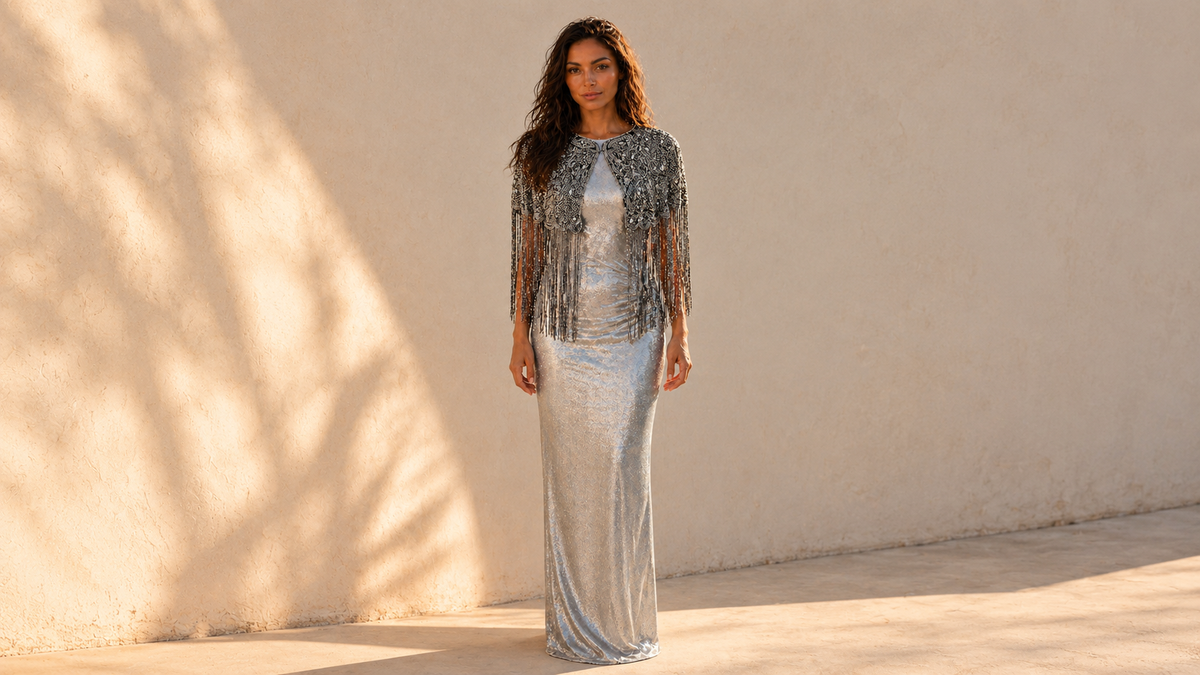
If you feel like dressing in a more special way, you can wear a dress with texture, a standout color, or embroidery. Start with the detail you like the most and then decide on the rest. Wearing several eye-catching elements is a possible choice; simply check that they all feel comfortable together during the performance.
With a long dress, do a test by going up a step and passing through a narrow space. The hem shouldn't force you to hold it up continuously. If you need to adjust it, fix the hem before you leave; choosing a higher heel just to keep it off the floor can change the comfort of the entire plan.
A well-kept flat shoe can accompany a very dressy outfit, just as a heel can if that is what you prefer. Check stability, support, and real comfort. For the bag, avoid placing chains or hardware over areas where they might snag. If the garment has relief on the back, evaluate how it feels against the backrest.
The coat is part of the outing, even if it doesn't appear in the photos you imagine. Try it on closed over the dress and think about where it will stay during the performance according to the venue's options. A prepared outfit includes that outer layer and does not depend on leaving it in a place that might not exist.
The final check before leaving
Prepare your ticket and the essentials in an accessible compartment. If you wear glasses for distance, save space for them without having to empty your bag. Store loose accessories in a way that they don't rub against the clothing. These decisions have more effect on the comfort of your outing than adding a final ornament.
Look at yourself once with the coat and once without it. Check the neckline when you lean forward, the waist when sitting, and the freedom of your arms. If something requires constant correction during that test, change that specific piece. There is no need to redo an outfit that works because of a difficulty that is easy to locate.
Questions when dressing for the theater
Can I wear jeans?
Check your event's instructions. If they don't restrict them and they fit your plan, you can wear them with a blouse or a jacket you like. The condition of the garments and your comfort matter more than applying a general rule to every theater.
Do I have to wear black?
There is no single color for this outing. Black and dark tones facilitate some combinations, but you can choose white, blue, brown, or a print. The decision starts with your outfit and any specific indications on the invitation.
What do I do if I don't know how warm the theater will be?
Prepare an outfit that you can adjust by removing a layer without losing the coverage you want. For the commute, choose the necessary protection based on the forecast. Avoid basing all your comfort on an indoor temperature you do not yet know.