Belt with a loose dress: where to place it and when to do without it
A belt can change the shape of a loose-fitting dress, but it is best to decide first what you want to achieve: tame the volume, highlight a specific area, introduce color, or maintain a straight drape. The correct position is one that works with the dress's pattern and allows you to sit and move comfortably. Wearing it without a belt is a complete look, not an outfit that is missing something.
Before adding one, try the dress as designed. See if it already includes elastic, a tie, darts, or a waist seam. A second adjustment might be redundant or shift the garment in a way you didn't intend. The useful test is to compare versions rather than tightening until a predetermined silhouette appears.
First, identify how the dress is constructed
Straight or loose-fitting shirt dress
In a dress that drapes loosely from the shoulders, a belt gathers fabric and creates a new support point. This action can also raise the hem and form folds above it. The more fabric you gather, the more visible the effect will be: check the sides and back, not just the front.
If the dress buttons, check the button line after adjusting the belt. It should continue to drape comfortably, without gaps that weren't there before or twisting that forces you to reposition the dress constantly. A model with pockets also needs room to use them without the belt blocking the entrance.
Dress with an elastic waist, band, or built-in tie
When there is a defined waist in the pattern, start there. Placing another belt far above or below it can create a second line and leave excess fabric between the two. You might like that result, but it deserves a conscious test. The original band does not disappear just because you add an accessory.
A built-in tie usually allows you to adjust the dress within its own design. First, try different levels of looseness and positions for the knot. If you later want to add another belt for its color, check that it doesn't cover up the pattern that attracted you or press on any closure pieces underneath.
Where to place it: compare three positions on the same garment
Start with a position that feels natural and move it slightly up or down to see what changes. There is no mandatory height based on your stature or body. The relationship between the torso, skirt, and neckline will vary, and you can choose the one you like without seeking any "correction."
At the waist: check how much fabric remains above and how the skirt opens. If you want a little looseness in the body of the dress, distribute it gently around, avoiding keeping all the accumulation in the front. Then, look at whether the back maintains a drape you feel comfortable with.
Slightly higher: make sure the band does not encroach on the bust or change the position of the neckline. In some dresses, a seam prevents you from moving the adjustment freely. If the belt keeps sliding to another height, don't try to solve it by tightening it more and more; compare the placement with the actual construction of the garment.
Width and stiffness: choose how you want to gather the fabric
A narrow belt creates a small line, but it doesn't always distribute a large amount of fabric well. A wide one covers more surface area and becomes a focal point of the outfit. No width is reserved for a specific height or size: what matters is its relationship with the dress and your comfort.
Also compare the stiffness. A flexible band can complement a gathered look; a firmer belt maintains its shape and requires checking how it sits when you move. If it folds, digs in, or forces you to constantly shift the dress, switch to a different model or go without it.
| What you are looking for | What to try | What to check |
|---|---|---|
| A subtle detail | Narrow, plain belt | That it doesn't get lost in folds |
| A bold focal point | Wider belt | Support and comfort when sitting |
| Gathering without stiffness | Flexible band | That the knot doesn't pull the dress |
A decorative buckle adds volume and can rub against embroidery or beads. Place it over an appropriate area and check its edges. If the dress has a central motif, decide whether you want to show it in full or interrupt it with the belt. The color of the accessory does not compensate for uncomfortable contact with the garment.
Two dresses that pose different decisions
Sereno: comparing the loose shirt dress with and without a belt
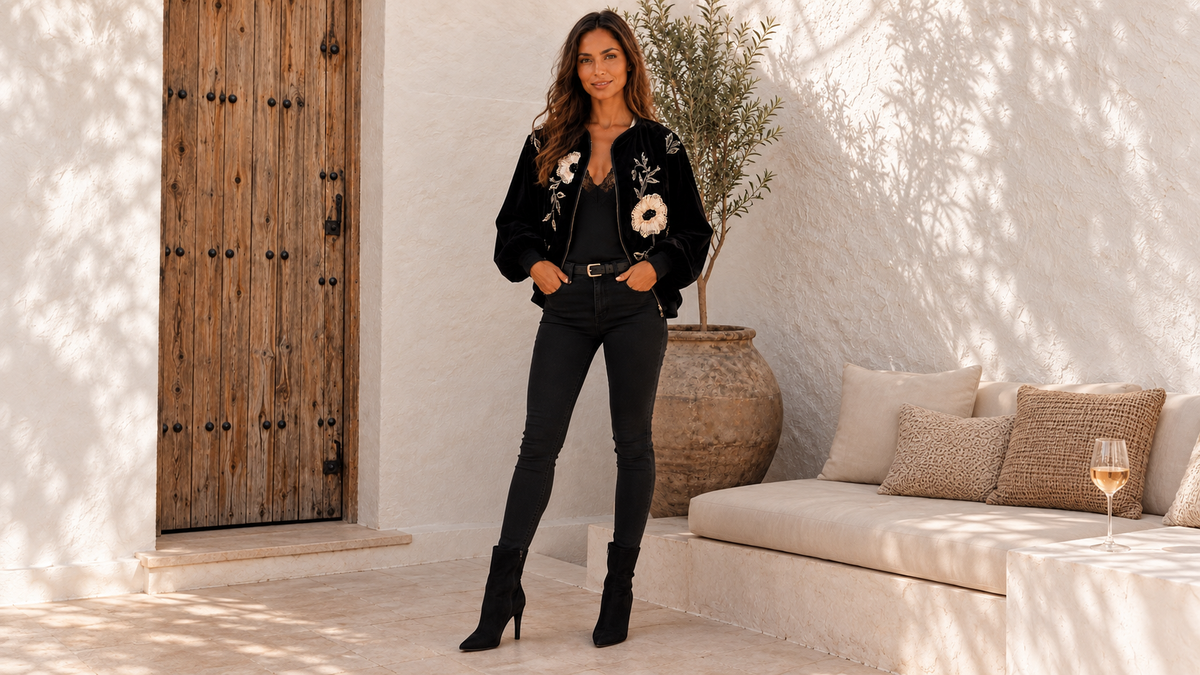
According to its description, the Sereno Short Dress has a loose silhouette, buttoned front, voluminous sleeves, and ruffles on the skirt. Its shape allows for two different looks: keeping the loose drape or trying a plain belt to gather part of the volume. It does not need the accessory to be considered finished.

If you try it cinched, pay special attention to the length. Gathering fabric over the belt can cause the hem to rise. Sit down and check the coverage you want to maintain. Also, observe the embroidery on the front to place the accessory where it won't press against the details or cover them unintentionally.
Neel: respecting a waist that is already defined
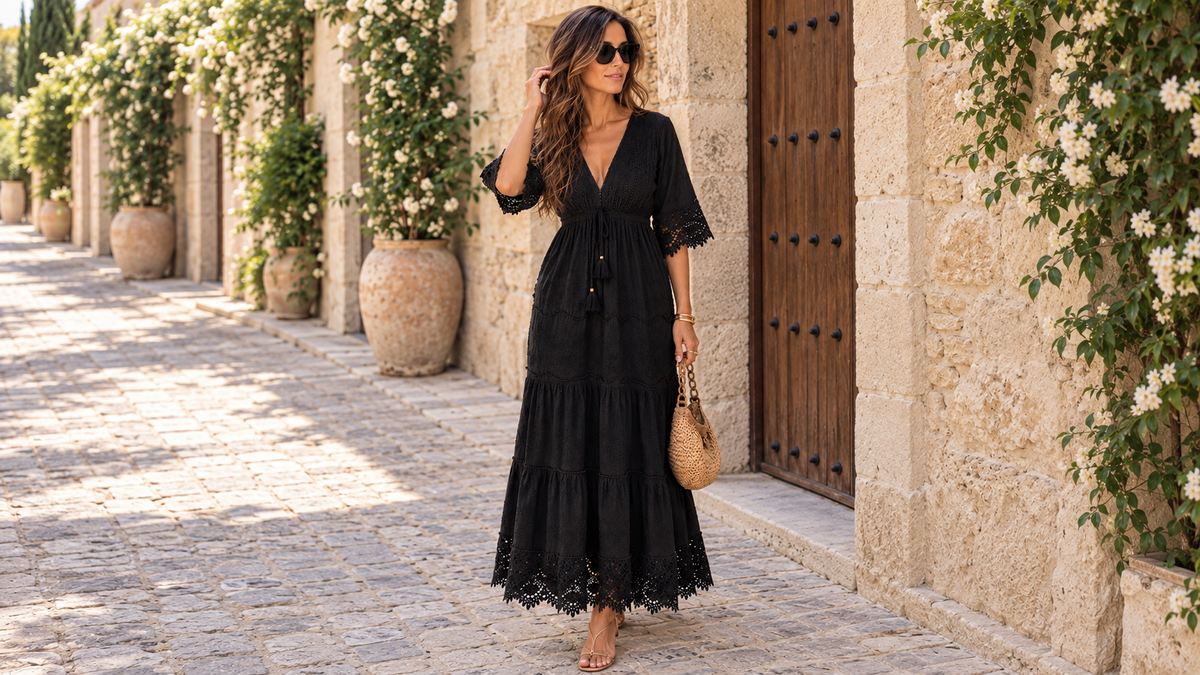
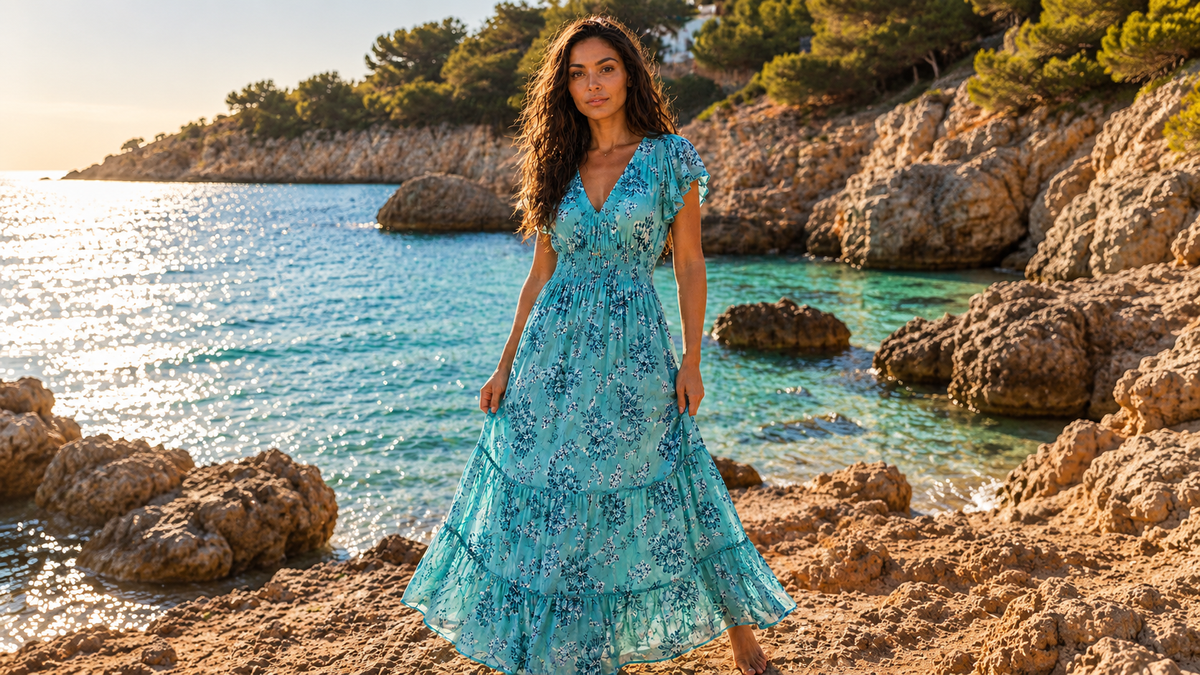
The Neel Long Dress features a gathered elastic waist. Before adding anything, evaluate whether that band already provides the adjustment you are looking for. A plain belt can add color, but it can also hide part of the gathering or create new volume where there was previously a single line.
With the floral print, you can choose a shade close to one of the motifs to connect the accessory without repeating all the colors. The alternative is to leave the waist free and save the contrast for the handbag. Both versions use the dress as a base and change where the detail is concentrated.
The movement test avoids deciding based on the mirror alone
First, take a front photo and a profile photo in a normal posture. Then, sit in a chair, lean forward slightly, and raise your arms. The belt shouldn't require you to maintain a rigid posture for the outfit to stay in place. Observe if the buckle turns, if the dress rides up, or if the neckline shifts.
Add the planned jacket. A wide band under a fitted layer can be uncomfortable even if it works well with the dress alone. If you want to compare alternatives, our guide on jackets to wear with long dresses helps check lengths and space between garments.
Also check your bag: a crossbody strap might clash with the buckle or rest against the knot. To distribute accessories around embroidery and appliqués, see how to choose accessories for an embroidered dress. The combination should allow you to wear the outfit comfortably during your plans, not just stand still.
When it makes sense to leave the dress without a belt
Go without it if you prefer the original looseness, if it interrupts a pattern you want to preserve, or if it requires constant readjusting. You can add intention to the outfit through a colored shoe, a bag with a defined shape, or a layer that frames the open dress.
Also, don't use a belt to compensate for a general sizing issue. Gathering the waist does not change the width of the shoulders, chest, or sleeves. If any of those areas don't allow you to move as needed, it's better to check the garment's fit rather than adding tension elsewhere.
Common questions
Can I wear a belt if the dress doesn't have loops?
Yes, but test if it stays where you want it when walking and sitting. If it shifts constantly, another accessory or the original drape might work better for that dress.
Should the belt match the shoes?
It is not necessary. You can relate it to a shade in the print, the handbag, or leave it as a contrast. Evaluate the complete outfit, including the jacket.
Is it better to wear it very tight?
The correct tension allows you to breathe, sit, and move normally. If you need to tighten it to keep it from slipping, check its position, its material, or its compatibility with the dress.