Fabrics for evening dresses: satin, velvet, lace, and crepe
Satin, velvet, lace, and crepe can produce very different results for a party dress. To choose, compare three things separately: the appearance of the fabric, its composition, and the dress's construction. A shiny surface does not reveal what it is made of on its own; a full-bodied texture does not guarantee that the garment is lined.
The goal is to know what to look for in a product description and photographs to find the finish you like and a dress appropriate for the occasion. There is no single fabric that is best for all celebrations.
Quick comparison of four finishes
| Fabric | What usually stands out | What to check on the dress |
|---|---|---|
| Satin | Smooth surface and luster | Composition, thickness, drape, and lining |
| Velvet | Pile surface and light variations | Whether it covers the whole garment or just details |
| Lace | Open pattern and decorative texture | Which areas the lining covers and which remain open |
| Crepe | Grainy texture, with variations in drape and shine | Specific type, weight, elasticity, and finish |
Satin: observe how it reflects light
Satin is recognized by its smooth surface and luster. It can appear in a fluid dress or one with more structure: the name does not determine the weight or the drape. Look for standing and movement photos to see how folds form and how the shine changes.
Satin does not necessarily mean silk. As the Mutsaers Textiles satin guide explains, it can be made with different fibers. Read the composition and check the model's description before drawing conclusions about the feel, washing, or elasticity.
Velvet: distinguish between main fabric and applications
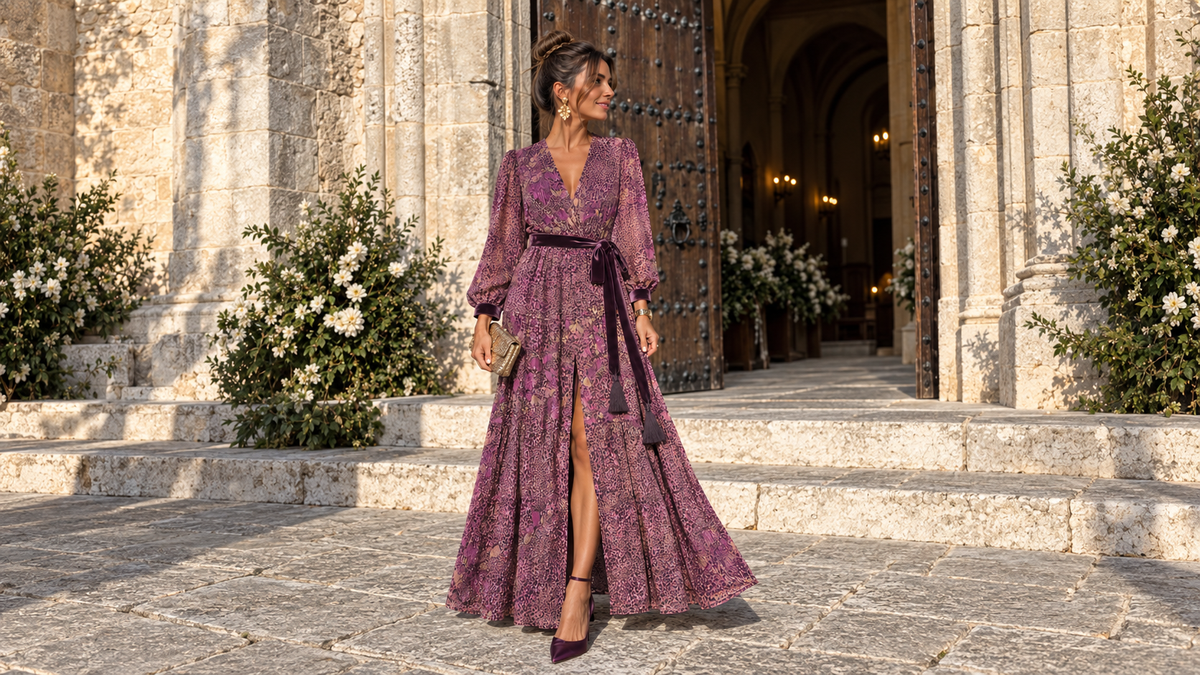
Its pile surface gives depth to the color and changes appearance depending on the light and orientation. Check the images to see if the velvet forms the entire dress or appears only on cuffs, ties, or panels. That difference greatly changes the result.
The Granada Dress, for example, is described as a fluid, printed dress with a tie-belt and velvet cuffs. It is an option for incorporating that texture into the details; it is not a dress made entirely of velvet. Its photograph illustrates that combination, not a sample of the four fabrics in this guide.

Lace: check what remains covered
Lace adds pattern and open areas. Pay attention to where it appears: sleeves without lining do not have the same effect as a bodice with an opaque base or a hem trim. It is also best not to treat "embroidery" and "lace" as synonyms: a dress can combine both.
The Cala Llonga Noche Dress incorporates guipure on the sleeves and hem, in addition to embroidery and beadwork in other areas. To decide what to wear underneath, review the specific coverage of the model and consult the guide on linings and transparency in dresses.

Crepe: ask for the specific type
Crepe groups together fabrics with a characteristic grainy look, but they do not all behave the same way. You will find light versions and others with more body, as well as variations in shine. That is why reading "crepe" is not enough to assume that a dress will be matte, stiff, or elastic.
Ask for a description of the drape and check the composition. If you are looking for a defined silhouette, see how the seams and pleats sit; if you prefer movement, check the fullness of the skirt and its behavior in video when available.
Choose with the entire celebration in mind
For a seated dinner, it is useful to test how the fabric and lining behave when you bend at the hip. If there will be dancing or walking, check the fullness, slits, and length. For being outdoors, evaluate the entire garment and the outer layer: no fabric name alone guarantees the warmth you need.
You can compare designs in the Atelier collection and complete your choice with the guide to measuring dress length. Care is also part of the purchase: always consult the model's label.
Frequently asked questions
Does satin always show more?
It cannot be predicted by the name alone. Thickness, pattern, lining, and fit all play a role. Check how the model drapes and if it offers the margin you need.
Does a lace dress have a full lining?
Not necessarily. Confirm the coverage of the bodice, skirt, and sleeves separately, and ask about areas that the photographs do not show clearly.