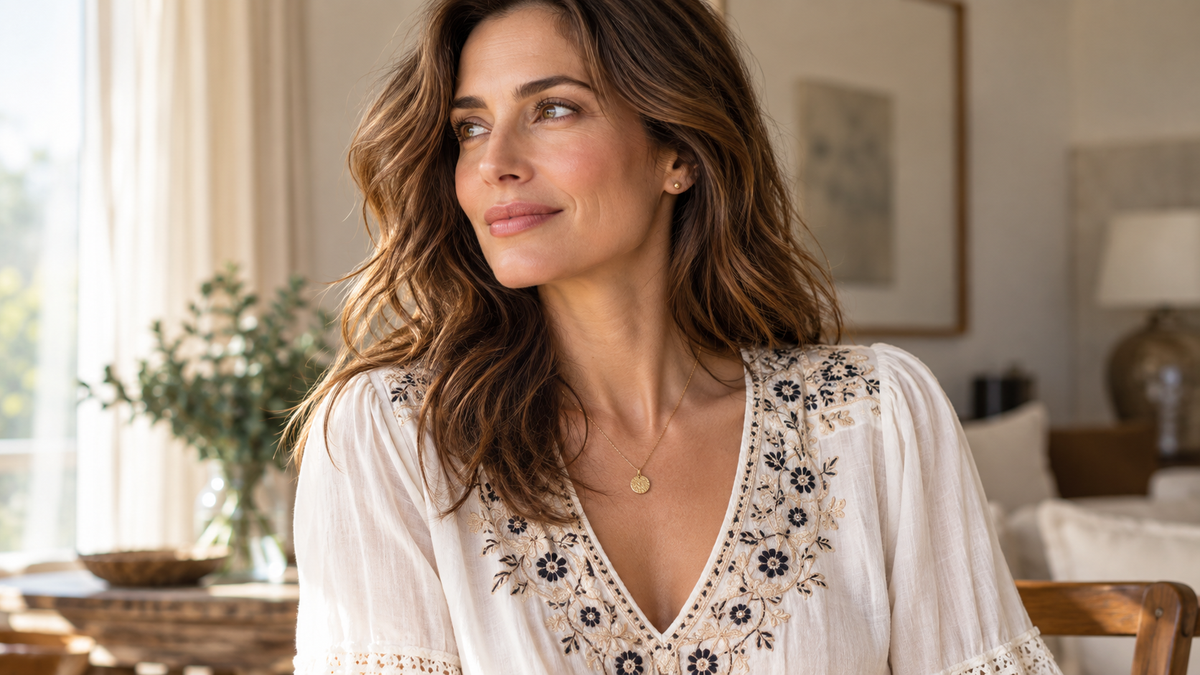
What is suzani embroidery and how to recognize its inspiration in a jacket
Suzani designates a tradition of embroidered textiles from Central Asia; it is not simply another word for any jacket with flowers. In fashion, the term also appears to describe garments that incorporate embroidery or motifs inspired by that decorative language. Knowing how to distinguish between the two helps in looking at design more carefully and correctly interpreting a product description.
If you have arrived looking for a suzani jacket, you are likely drawn to its flowers, the contrast between background and pattern, or the presence of the embroidered surface. You can use these characteristics to choose a garment that fits your wardrobe. Beforehand, it is worth spending a moment on its context and then separating what is documented from what we can only observe in a photograph.
What suzani means and its context
The Metropolitan Museum explains the term based on the Persian word related to the needle. Its records describe textiles crafted in territories that today correspond to Uzbekistan and Tajikistan, used in domestic interiors and also linked to wedding trousseaus. A cover attributed to Bukhara, from the early 19th century, displays silk embroidery on linen.
In another piece from the museum, attributed to Nurata, a central medallion and floral plant motifs appear on cotton. These examples allow us to see that the compositions and materials are not identical in all suzanis. The records document specific pieces; they do not serve as a certificate of origin, age, or technique for a contemporary jacket.
You can consult both examples in the official Metropolitan Museum records: cover attributed to Bukhara and embroidered textile attributed to Nurata. They are a good visual reference for observing differences without reducing a textile tradition to a single floral drawing.
Textile tradition, inspiration, and garment description
When a store uses the word suzani, it is advisable to read the rest of the explanation. It may be describing a documented textile piece, a garment made with a specific fabric, or a design inspired by certain motifs. These situations are not equivalent. A beautiful photograph can help you choose colors, but it cannot by itself reconstruct the manufacturing history.
Look for separate data: what material is indicated, what technique is described, and whether information is provided about its creation. The word "handcrafted" also does not replace those details. If you are interested in a specific provenance or knowing who did the embroidery, ask for that information explicitly. Choosing a garment for its design is perfectly valid; attributing a history to it requires additional documentation.
Four visual aspects you can observe
The first is the scale of the motif. Compare the size of the flowers or shapes with that of the jacket. A large pattern can dominate the overall view, while small embroidery is appreciated more up close. No scale is mandatory for any body type. Choose based on how much presence you desire and what other garments you plan to combine it with.
The second is the distribution. Look at whether the pattern is concentrated on the front, runs along the sleeves, or highlights edges and openings. Also observe which parts remain plain. That distribution matters when carrying a shoulder bag, when closing the garment, and when wearing a scarf. A detail you love in a photograph may be hidden by your usual layers.
The third is the contrast. Thread close to the background color produces a different reading than light embroidery on a very dark base. To compare, look at the image in a small size and then enlarge it. The first view shows you the whole; the second, the detail. This way you avoid choosing based solely on a close-up that does not represent how the garment will look when worn.
The fourth is the relief. The stitches can add texture, but an image does not always confirm their thickness or how they feel to the touch. Check profile or detail photographs and consult the product description. Do not trust a supposed irregularity as proof of authenticity: a provenance evaluation needs information that goes beyond the appearance of the surface.
An example from the catalog: Corina
The Corina Jacket is described at Martina Ibiza as a burgundy cotton velvet jacket with hand-stitched gold floral suzani embroidery. It features a mandarin collar, button front, and flap patch pockets. These are the data points of the garment that you can use to imagine its texture, its closures, and its combination.
The reference in its description to suzani embroidery does not, in itself, guarantee that it is an antique textile or a piece made in a specific place. To wear it, simply work with what is described: the burgundy base, the gold pattern, and the cut of the jacket. You can let those three elements organize the rest of the outfit.

Three ways to introduce it into your wardrobe
With jeans and a plain T-shirt: combine a decorated jacket with straight blue jeans, a T-shirt without a print, and simple ankle boots. Leave the jacket open if you want the front to form two zones of color. Check that the T-shirt does not stick out in a way you don't like. The outfit works for a walk or a meal because it uses familiar garments as a base.
With dark trousers and a discreet blouse: choose black trousers, a plain-surfaced blouse, and shoes you already wear comfortably. If you wear the Corina, you can repeat the gold in a small earring, without needing to add it also to the bag, belt, and footwear. A single repetition can be enough to relate the accessories to the embroidery.
With a plain dress: try the jacket over a simple dress and observe where both hems meet. Walk and sit down before deciding. If you want more examples of these bases, follow the guide for a suzani jacket with plain garments. To work on a specific combination with denim, consult embroidered jacket and jeans.
Other embroidered jackets can give you a different effect
If what you are looking for is a black base and a bomber silhouette, the Lotus Flower Jacket offers off-white embroidered flowers, rhinestones, and ribbed finishes. Its description specifies hand-embroidered floral work on cotton velvet. It is another embroidered option in the catalog; we don't need to classify it as suzani to compare its shape and colors with the Corina.
Make the comparison thinking about your usual clothes. A bomber and a mandarin collar jacket relate differently to a skirt, a hoodie, or a turtleneck. Mentally try three real outfits for each option. This specific check usually clarifies the choice more than looking for a style label that summarizes everything.
Frequently asked questions about suzani-inspired jackets
Are all embroidered flowers suzani?
No. Floral motifs appear in many techniques and designs. To describe a garment, use the available information and avoid deducing a tradition or provenance solely from the presence of flowers.
Does suzani mean it is handmade?
The term has its own textile context, but in a contemporary purchase, you must verify how the specific garment was made. The manual technique should be documented in the product description or confirmed by the seller.
Can I wear a decorated jacket every day?
Yes, if its shape, comfort, and care requirements fit your routine. Try a simple base and check the space under the coat. Reserving it for a special occasion is a personal preference, not an obligation of the embroidery.