
The Costa del Sol in style: how to avoid the "beach bar tourist" cliché
The Style Guide for Dressing on the Costa del Sol with Discernment · By Martina
IN BRIEF
• The Costa del Sol is famous for mass tourism, but it also has a vibrant local life with style: Malaga city is experiencing a strong cultural moment, and towns like Nerja or Estepona retain a charm that calls for discerning attire.
• The anti-cliché formula: natural fabrics (linen, cotton), Mediterranean palette (off-white, earth tones, terracotta), quality flat shoes, understated accessories. The opposite of the "tourist beach bar look" of prints and sparkle.
• The most recognizable mistake: dressing for the Costa del Sol as if it were only a beach. Malaga city is a city with museums, gastronomy, and culture that calls for a more urban-Mediterranean dress code.
• Each area calls for a nuance: Malaga city (culturally urban), white villages (natural), beach areas (relaxed with discernment), Marbella (see specific article).
The Costa del Sol carries an unfair aesthetic prejudice. When people think about how to dress there, they imagine Torremolinos in August: plastic flip-flops, T-shirts with slogans, giant beach bags, all very touristy and very high season. And yes, that Costa del Sol exists. But it's only one part, and not the most interesting.
Because the Costa del Sol is also Malaga city experiencing one of the best cultural moments in its history (the Soho district, the Picasso Museum, the Centre Pompidou, Muelle Uno, a booming gastronomic scene). It is the white villages of La Axarquía. It is Nerja and its coves. It is Estepona with its old town full of flowers. It is a coast with a lot of local life, many discerning people, and many settings that call for dressing well.
This guide is for that Costa del Sol: the one that wants to dress with style without falling into tourist clichés, but also without being overly pretentious. The elegant and Mediterranean middle ground. If you vacation, live, or visit the Costa del Sol and want to distinguish yourself from the "generic beach bar look," this is your guide.
The cliché to avoid: the "high season tourist look"
Let's start by precisely identifying what we do NOT want, because it is very recognizable. The "Costa del Sol high season tourist look" has very specific codes that give it away from a distance.

The elements of the cliché: flashy tropical prints (palm trees, giant flowers, saturated color prints), plastic flip-flops or sports sandals, huge industrial raffia beach bags, T-shirts or sarongs with slogans, eccentric colorful sunglasses, and generally an accumulation of "all very beachy" even in non-beach contexts.
The problem is not that it's wrong to be comfortable or dressed for the beach. The problem is taking the beach code to settings that call for something else: a dinner at Muelle Uno, a walk through Malaga's Soho, lunch in Marbella's old town. There, the beach bar look stands out. The key is to read the setting and adapt the code, not to go "coastal" generically everywhere.
The elegant alternative is not to dress more formally. It is to dress with more discernment: natural fabrics instead of printed synthetics, a neutral palette instead of saturated colors, quality footwear instead of plastic flip-flops, understated accessories instead of accumulation. Same comfort, much more style.
Malaga city: the cultured city that calls for an urban-Mediterranean code
Malaga city deserves its own code because it is no longer "just a place to pass through on the way to the beach." It is a cultural destination in itself, with a sophisticated urban life that has grown enormously in the last decade. And that is reflected in how discerning people dress.

Malaga city code:
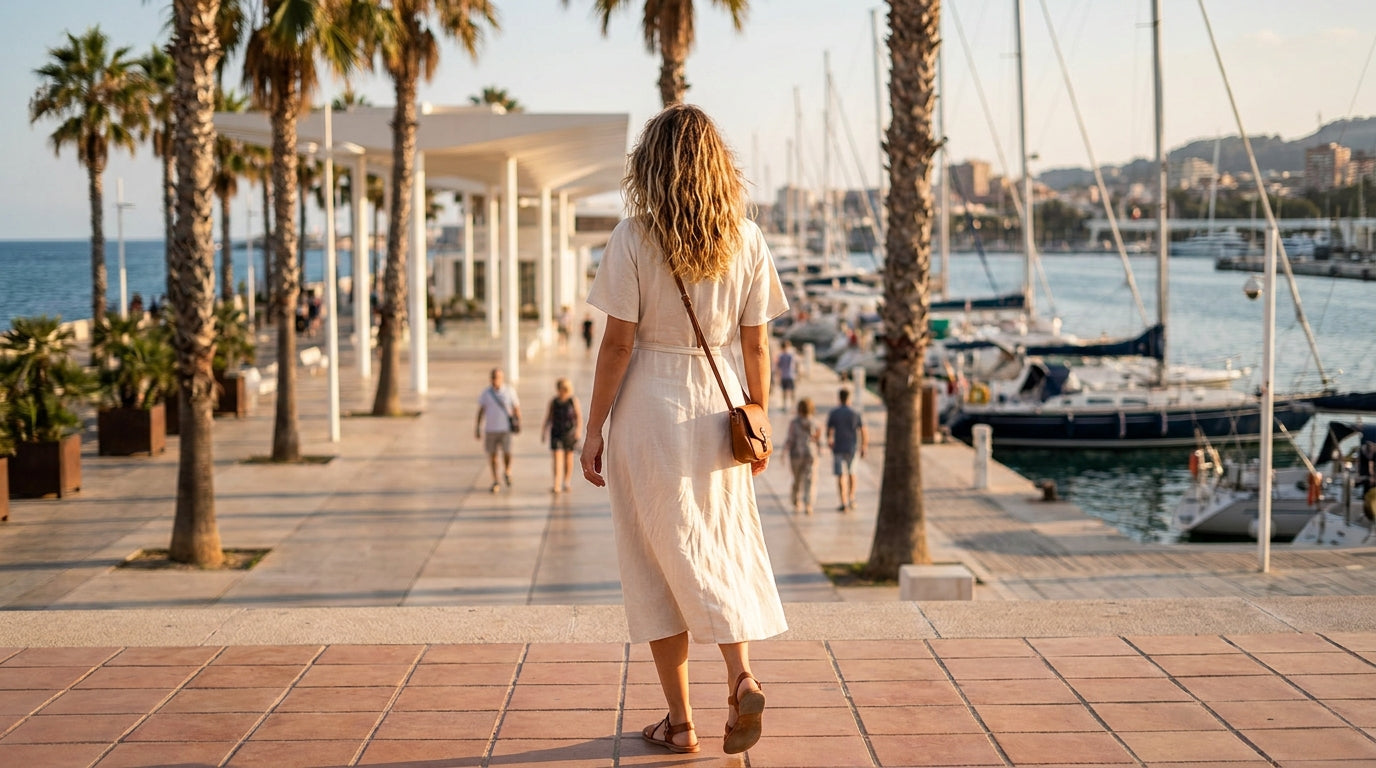
Urban-Mediterranean. More elaborate than for the beach but without losing the freshness of the south. Linen midi dresses, top and cropped pant sets, linen shirts, flowing skirts. A palette that allows for more than just the beach: off-white, earth tones, terracotta, but also navy, olive green, and even black for the evening. Footwear: quality sandals, wedge espadrilles, sandals with square heels for the evening.
Malaga settings and their code:
-
Soho and Picasso Museum (cultural day): linen midi dress or cropped set, comfortable flat sandals for walking, medium bag, classic glasses. You'll be walking a lot between museums and streets.
-
Muelle Uno and port (stroll and dinner): elevate it a notch. More refined dress, wedge or low heel, small bag. This is an area for seeing and strolling.
-
Historic center and cathedral (cultural tourism): comfortable but with discernment. Linen, good sandals, straw hat for the intense Andalusian midday sun.
-
Terraces and rooftops at night (La Terraza de La Alcazaba, hotel rooftops): urban night code. Elegant dress, medium heel, impactful accessories. Here, Malaga is as cosmopolitan as any capital.
The white villages and the charming coast
Beyond Malaga city, the Costa del Sol has towns with immense charm where the code returns to natural Mediterranean style. Here, the Ibiza style works perfectly.

Nerja and eastern Axarquía:
Nerja, with its Balcón de Europa and its coves, has a more relaxed and natural atmosphere. Here, the code is pure Mediterranean: linen dresses, flat sandals, straw hat, natural bag. The Ibizan aesthetic fits perfectly. The inland white villages (Frigiliana, Cómpeta) call for the same: natural, fresh, unpretentious.
Estepona and the flowery old town:
Estepona has renovated its old town with streets full of flowers and pots that have made it one of the most beautiful on the coast. It's a setting for a linen midi dress in shades that complement the flowers (off-white, terracotta, earth tones), flat sandals, small bag. Very photogenic, calls for a natural look that doesn't compete with the surroundings.
The inland villages (Mijas, Casares, Gaucín):
The white mountain villages near the coast have a more rural and authentic feel. Here, the code is the most natural of all: linen, cotton, earth tones, comfortable footwear for steep, cobblestone streets. No heels, no sparkle. Rural Mediterranean elegance.
The beach code (relaxed but with discernment)
And we arrive at the beach, the scenario where it's easiest to fall into cliché but also where small adjustments make all the difference. The key: beach with discernment, not generic tourist beach.

What works on the beach/chiringuito of the Costa del Sol:
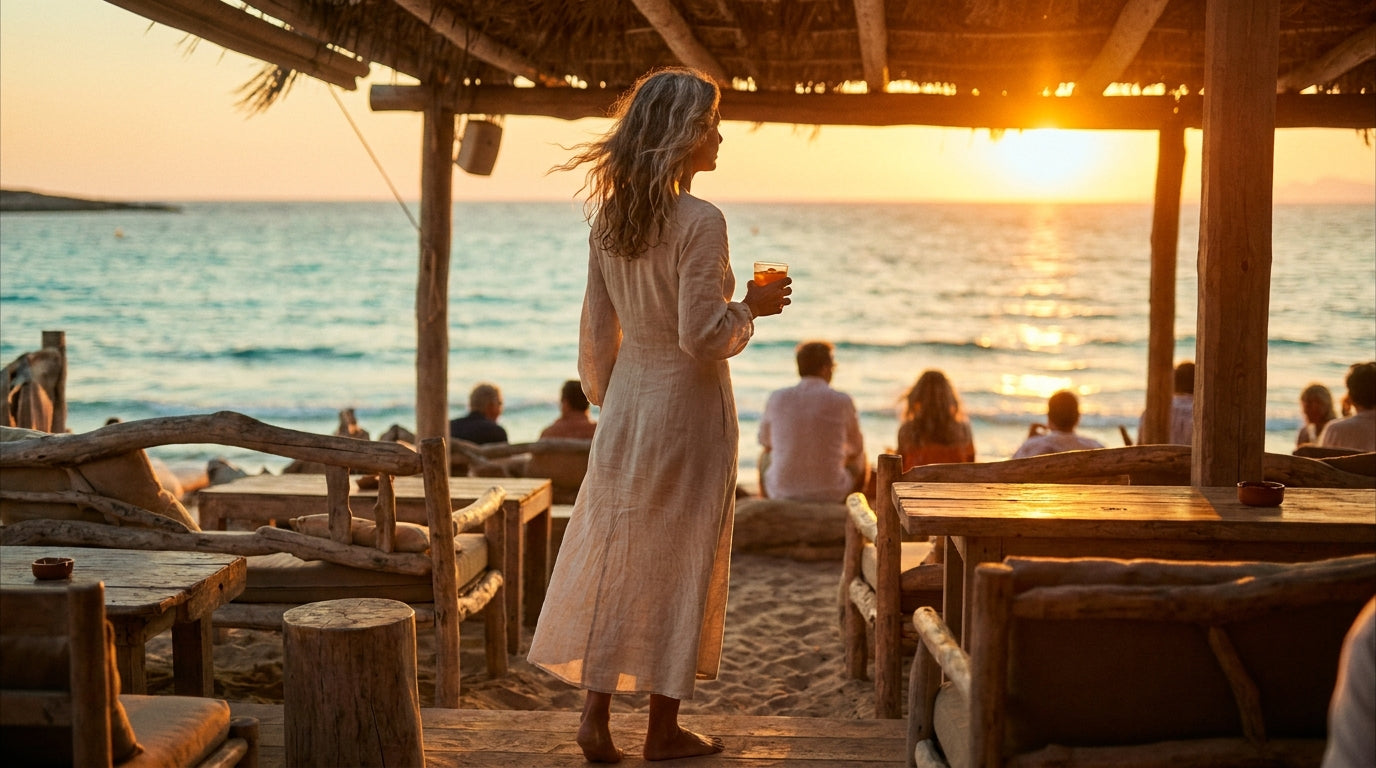
Bikini or swimsuit in natural colors (no loud prints) under a linen or cotton kaftan in off-white or earth tones. Wide-brimmed straw hat. Beach bag in natural jute or raffia (not the industrial printed tote). Flat leather sandals or espadrilles. Classic glasses. The difference from the cliché is in the materials (natural) and the palette (neutral), not in wearing more clothes.
To go from the beach to the chiringuito or merendero:
The Costa del Sol has a gastronomic institution: the espeto chiringuitos (grilled sardines). To eat an espeto at a stylish chiringuito, wear a short linen or natural cotton dress over your bikini, take off your hat, and wear flat sandals. From the water to the table without looking like you came in a towel. It's the usual trick, applied to the Malaga chiringuito.
Looks by scenario (practical summary)
To make the system clear, here's a summary of what to wear depending on where you are on the Costa del Sol.
-
1. Cultural day in Malaga (museums, Soho): off-white linen midi dress + quality flat sandals + medium bag + classic glasses + hat for midday.
-
2. Dinner at Muelle Uno or rooftop: midi or long dress in linen/earth tones + medium wedge or square heel + small bag + impactful earrings.
-
3. White village (Nerja, Estepona, Frigiliana): linen dress in earth tone or off-white + flat sandals + natural bag + 100% Mediterranean look.
-
4. Beach and espeto: natural bikini + linen kaftan + straw hat + jute bag + espadrilles. From the water to the table with a short dress.
-
5. Night on the coast (Marbella, Estepona port): elevate your presence. Elegant dress + comfortable heels + accessories. For Marbella specifically, consult the dedicated guide.
The dresses that work best for dressing on the Costa del Sol with discernment (linen in earth tones and off-white, versatile from day to night) are in our Ibizan dress collection. And if your destination specifically includes Marbella and Puerto Banús, we have a specific guide for Marbella in summer with details for each scenario in the city.
Frequently Asked Questions about dressing on the Costa del Sol in summer
How do I dress on the Costa del Sol without looking like a tourist?
The key is in the materials and palette, not in wearing more clothes. Choose natural fabrics (linen, cotton) instead of printed synthetics, a neutral Mediterranean palette (off-white, earth tones, terracotta) instead of saturated colors, quality footwear (leather sandals, espadrilles) instead of plastic flip-flops, and understated accessories. The tourist cliché is recognized by tropical prints, sparkle, and accumulation.
What do I wear to visit Malaga city?
Malaga city calls for an urban-Mediterranean code, more elaborate than for the beach. For a cultural day (museums, Soho): a linen midi dress or a cropped set with comfortable walking sandals. For dinner at Muelle Uno or a rooftop: elevate it a notch with a more refined dress and low heels. The palette allows for off-white, earth tones, navy, and even black for the evening.
Does the Ibizan style work on the Costa del Sol?
Perfectly, especially in the white villages (Nerja, Estepona, Frigiliana) and beach areas. The Mediterranean aesthetic of linen, earth tones, and craftsmanship fits naturally. In Malaga city, it works but a more urban touch is advisable. It's the same Mediterranean code with nuances depending on the scenario.
What should I wear to an espeto chiringuito?
Over a bikini or swimsuit (in a natural, non-printed color), a short linen or cotton dress or kaftan, flat leather sandals or espadrilles, and a natural jute bag. The difference from the tourist look is in the natural materials and neutral palette, not in wearing more clothes. From the water to the table without looking like you came in a towel.
What's the difference between dressing for Marbella and the rest of the Costa del Sol?
Marbella (especially Puerto Banús) has a code with more presence and a bit more visible luxury than the rest of the coast. Malaga city is more urban-cultural, the white villages are more natural, and the beach areas are more relaxed. Marbella deserves its own guide for its specific settings. The rest of the Costa del Sol generally calls for a more discreet and natural Mediterranean code.
Do I need to dress very formally for evenings on the Costa del Sol?
It depends on the scenario. For dinner in a village or chiringuito, a refined natural look is sufficient. For Malaga rooftops, marinas, or Marbella areas, elevate your presence with a more elegant dress, comfortable heels, and impactful accessories. The nighttime Costa del Sol ranges from very relaxed to cosmopolitan depending on where you are.