How to wear a long kimono: 5 outfits beyond the beach
A long kimono can be worn over trousers and a top, a simple dress, or a plain skirt. To take it beyond beach outfits, prepare a base that works on its own and check the length with your actual footwear. The front opening, the sleeve, and the movement of the two hems will determine if the combination is comfortable.
The following five proposals are based on specific situations: a morning of errands, a lunch, a dinner, a cultural visit, and an informal meeting. You can adapt them using clothes from your own closet. The idea is for the long layer to have a clear function within each outfit, even when you change shoes or take it off upon arrival.
Before combining it: observe the opening, sleeve, and hem
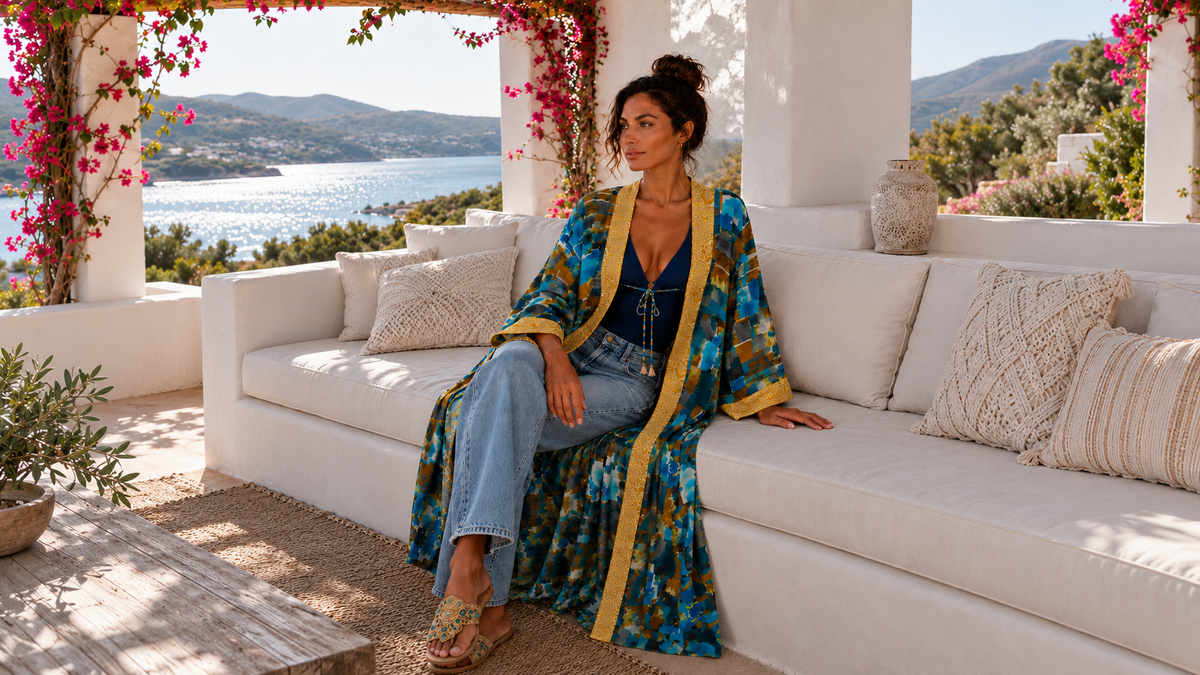
The Aegean Long Kimono offers a reference for these ideas. Its product page describes an open garment with a tie and tassel at the neckline, wide three-quarter sleeves, and a blue and ochre print. The trousers, shoes, and tops suggested in this guide are styling ideas that you can resolve with your own pieces.
A tie at the neckline is not equivalent to a full closure. Prepare the outfit's undergarments thinking that the kimono may open when you walk or sit down. It is also advisable to wear it while reaching for your bag, bringing your arms toward your body, and leaning on a table: this way you will check where the sleeves fall during normal activities.

1. Straight jeans and a t-shirt for an urban morning
Start with the jeans and t-shirt you would wear without the kimono. If they are comfortable together, adding the long garment will be simpler. Denim without embellishments offers a calm surface against a bold print. The t-shirt can pick up the blue from the pattern or introduce ecru to create a clearer separation.
First, try the top tucked into the waist. This makes the start of the trousers visible and allows you to compare the volume of the layer with the base. If you prefer to wear it untucked, observe the space between the hem of the t-shirt and the end of the kimono: there is no mandatory proportion, but the overlap should be intentional.
Complete the look with sneakers or loafers you have already tested while walking. Look at the kimono hem with that footwear, because a photo with heels is not useful for deciding how it will fall on flat shoes. For a morning with several stops, your bag should allow you to access keys and phone without constantly having to hold up the sleeve.
2. Ecru trousers and a blue top for a lunch
With a light base, the kimono's pattern remains more distinct from the inner garments. Straight ecru trousers and a blue top form a simple combination for a restaurant lunch. You can repeat one of the blues from the Aegean print roughly, without seeking an exact match between fabrics.
Choose the neckline after trying on the kimono. If the front border already frames the upper part significantly, an unadorned top makes the combination easier. A turtleneck introduces a different, more closed look; a round neck leaves the area clear. The decisive factor is that the edges of the top, the tie, and a necklace do not all accumulate at the same point.
To sit at the table, carefully gather the ends that might end up under the chair and check where the sleeves rest. If the restaurant has little space, a very open long garment may require more attention. A compact handbag avoids having to cross a strap over the entire border and allows you to show off the full front.
3. Simple black dress for a dinner
A simple, straight-cut black dress allows the kimono to focus on color and movement. Before choosing accessories, observe the two lengths together: if the dress is midi and the kimono ends lower, you will see an overlap; if both have a similar length, the effect will be more continuous. Compare the options while walking, in addition to looking in the mirror from the front.
With a slip dress, check if you want to leave your shoulders visible when you take off the layer. With a long-sleeved one, check that the inner sleeve does not bunch up inside the outer one. You can expand on that decision in how to wear a slip dress when it gets chilly.
Plain shoes and a small bag keep the print in the foreground. You do not need to add rhinestones for the outfit to be suitable for a dinner. If the plan requires a specific dress code, start with that: changing accessories does not automatically turn any open garment into an option for every event.
4. Plain midi skirt for visiting an exhibition
A midi skirt with little volume and a simple top allow you to play with length differences. Try the skirt in a color that appears in the print or a neutral that you already wear. The kimono can remain open to leave the entire outfit visible, provided the base itself offers the coverage you desire.
In this case, the most useful test consists of walking at a normal pace and climbing a step. The two bottom garments should move without one catching the other. If the skirt has a slit, also observe what happens when you sit down. You don't have to eliminate it, but it is worth knowing how the combination changes while moving.
For a long visit, wear footwear in which you can comfortably stand for a long time. A small shoulder bag can work, although you should check where the strap rests and whether it shifts the kimono to one side. The wide sleeves should not force you to hold them back every time you open the bag.
5. Dark trousers and a plain top for an informal meeting
If the environment allows for a relaxed dress code, you can place the kimono over dark trousers and a top without patterns. The sober base makes the print the main detail. For professional meetings, confirm the dress code of the place beforehand; a decorative long layer does not have the same reading as a blazer in all contexts.
Check comfort while sitting at a table: the hem should be placed without pulling on the back, and the sleeves should not constantly invade the work surface. A simple scoop-neck t-shirt reduces layers around the neck. It also helps if the bag remains accessible without getting trapped under the garment.
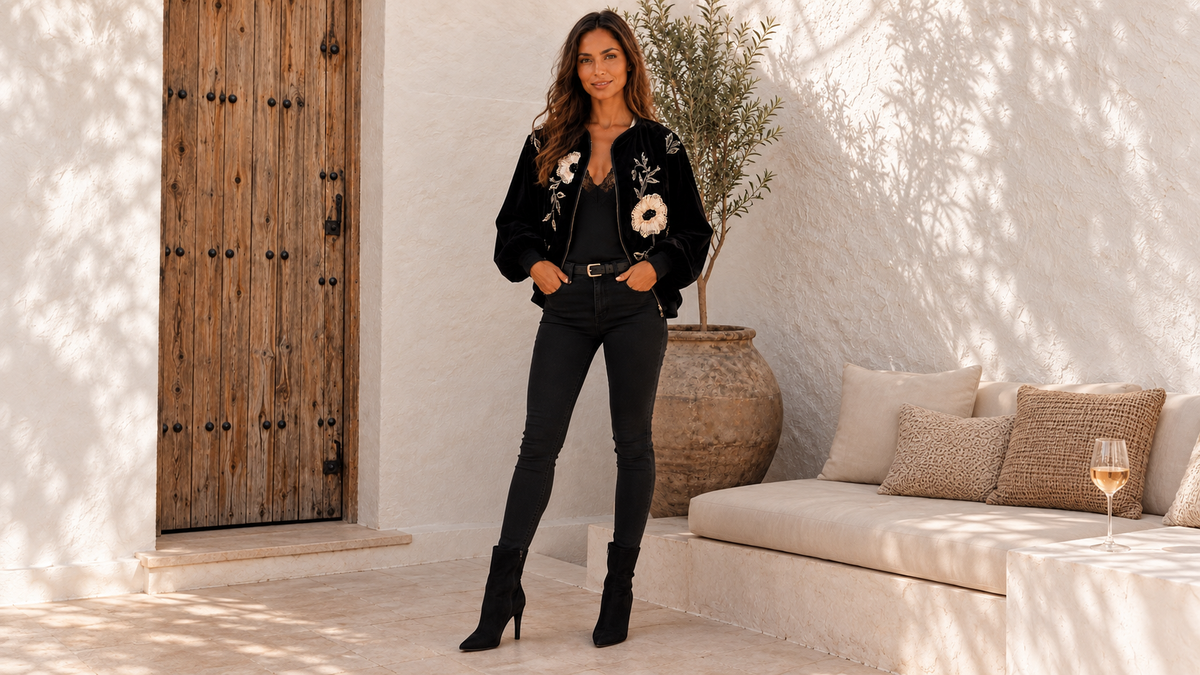
If you need a shorter alternative, the Lotus Flower Jacket allows you to compare a different silhouette over the same base. It is a black bomber with light-colored flowers, so both the length and the distribution of the pattern change. The choice depends on the usage: you can keep the inner outfit and decide which outer garment fits your schedule better.
How to adapt any of the five outfits
Start by changing only the shoes or the top. If you replace the trousers, the bag, and the layer at the same time, it will be difficult to recognize which element improved the combination. A photo from the front and another from the side can help you remember the version you liked, without turning the mirror into an endless trial.
If you need more warmth, check the forecast and your travel clothing separately. The appearance of a fluid garment does not demonstrate its insulation or protection against the wind. The guide on boho style when it gets cold elaborates on how to organize layers according to their function.
Practical questions
Can I wear the kimono closed as a dress?
Only if the construction of the garment allows for such use and offers the coverage you need. An upper tie on an open garment is not enough to ensure it; prepare a complete base underneath.
Does a long kimono require wearing heels?
No. Try it with the footwear you want to wear and check that the hem does not drag or get caught under the sole. The actual length matters more than the type of shoe.
What do I do if the sleeve bothers me at the table?
Check if you can place it comfortably without straining seams or holding it with improvised accessories. If it requires repositioning at every moment, choose a garment with more contained sleeves for that plan.