
How to wash, dry, and iron linen without damaging it (says someone who works with it)
The complete linen care guide, from the workshop · By Martina
IN SUMMARY
• Linen is best washed by hand or on a delicate cycle at a maximum of 30°C, with mild soap and without strong spinning. Hot water and aggressive spinning are its two great enemies.
• Linen WRINKLES naturally: its fibers are rigid and not very elastic. It's not a defect; it's its character. Wrinkling can be minimized, but the soft wrinkle of linen is part of its beauty.
• To dry: in the shade, flat or on a hanger, stretching the garment with your hands while it is damp. Never tumble dry at high temperature (it shrinks and weakens the fiber).
• To iron: when the linen is still slightly damp, use a hot iron with steam, inside out if it has embroidery or embellishments. Or simply don't iron and embrace the "lived-in linen" look.
Of all the questions I receive from clients, the most frequent is not about sizes or colors. It's about linen: "Does it shrink?", "How do I wash it?", "Why does it wrinkle so much?", "Can I put it in the dryer?". And I understand perfectly, because linen is a wonderful fabric but with character, and if you don't know it, you can ruin a good garment in the first wash.
I've been working with linen for years: choosing it, cutting it, seeing it go through dozens of sample washes before a garment goes to market. I've learned how it behaves, what spoils it, and what keeps it beautiful for years. This guide is all of that, explained in a practical way.
And I start with the most important truth, the one that changes the entire relationship with this fabric: linen wrinkles, and that's not a problem to fix, it's a characteristic to understand. Let's see.
Why linen wrinkles (the real explanation)
Linen is made from the stem fibers of the flax plant (Linum usitatissimum), one of the oldest textile plants used by humanity: it has been cultivated for fabric for more than 6,000 years, and fragments of linen have been found in ancient Egyptian tombs. This fiber has a very specific structure that explains all its behavior.

Macro detail of linen fabric weave showing natural fibers
Linen fibers are rigid, not very elastic, and hollow inside. This gives them three properties: they are extremely cool and breathable (the hollow interior channels air and moisture), they are very resistant (more than cotton), but they crease and mark easily because they don't have the elasticity to regain their shape. When you fold a linen fiber, it stays folded. Hence the wrinkle.
Compare it with polyester: synthetic fibers are elastic and "remember" their shape, which is why they don't wrinkle ( but they also don't breathe, which is why they are hot in summer). Linen is exactly the opposite: it wrinkles because it is alive, because it breathes, because it is a natural fiber without artificial treatments. The wrinkle is the price (and the signature) of its freshness.
Therefore, the first decision you have to make with linen is philosophical: do you want to fight the wrinkle or embrace it? There is a trend, especially in Mediterranean and Ibizan style, that considers "lived-in linen" (with its natural soft wrinkles) as the most elegant way to wear it. Other occasions call for more ironed linen. This guide teaches you how to do both.
How to wash linen step by step
Washing is when most linen garments get damaged, almost always due to excessive harshness. Linen is resistant, but it doesn't like heat or mechanical violence. These are the correct steps.

Hands gently washing a linen garment by hand in a basin
-
1. Check the label first. Each garment may have its own specifications (some linens have treatments, blends, or delicate details). The label takes precedence over any general advice.
-
2. Separate by colors. Linen, especially in its first washes, may release some color. Wash ecru and whites separately from earth tones or dyed items.
-
3. Cold or lukewarm water, maximum 30°C. Hot water is the main cause of linen shrinkage. At 30°C or less, the risk is minimal. Never use hot water.
-
4. Neutral and mild soap. Mild liquid detergent or neutral soap. Avoid chlorine bleaches (they weaken the fiber and yellow ecru items) and aggressive softeners (they mat the fiber and reduce breathability).
-
5. By hand or delicate cycle. If washing by hand: immerse, move gently, do not rub violently, do not wring. If washing by machine: delicate or wool cycle, low spin (400-600 rpm max), preferably inside a delicate laundry bag.
-
6. Do not spin aggressively. Aggressive spinning creates the most difficult wrinkles to remove (it marks them dry under pressure). Gentle spin or simply wring by hand without twisting.
How to dry linen correctly
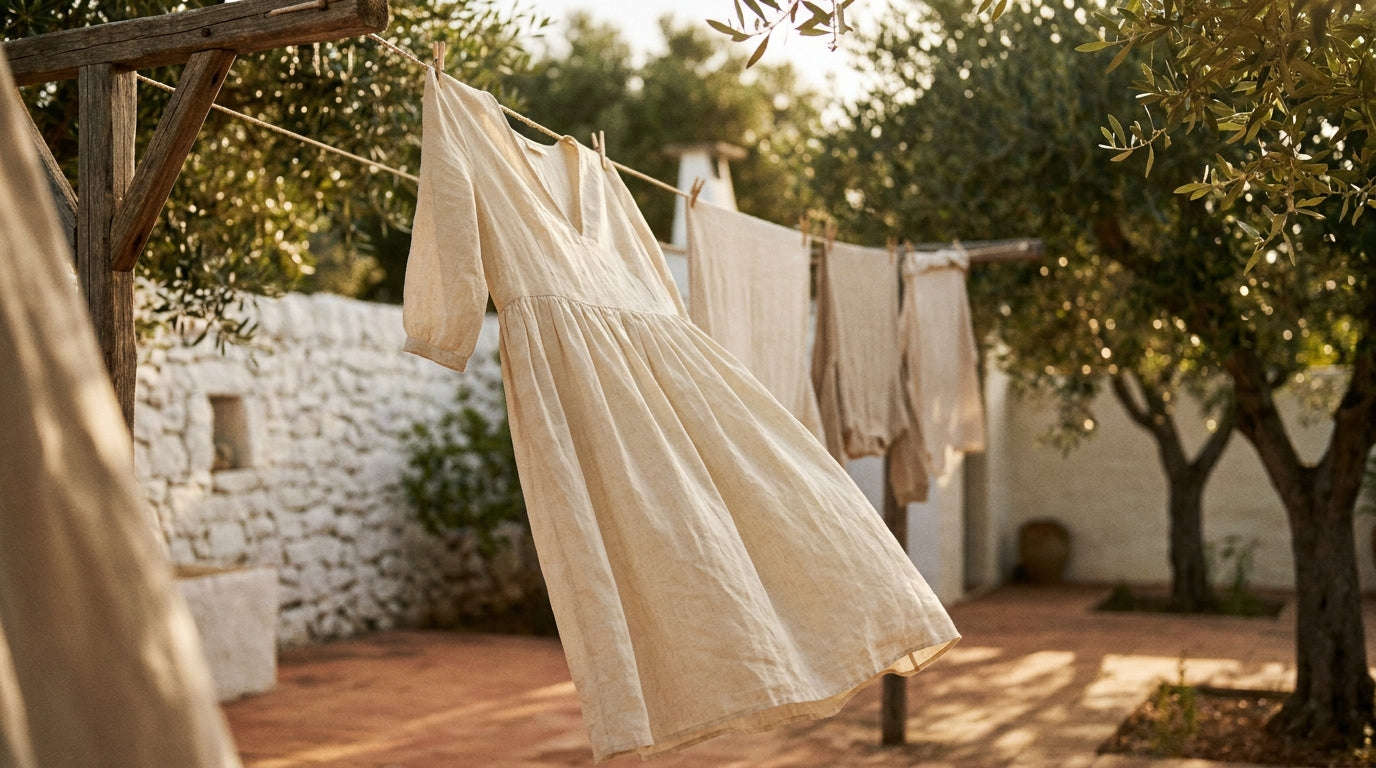
Drying is as important as washing and is where you can "prepare" the garment so that it hardly needs ironing. The key: dry in the shade and stretch while it's damp.

Linen dress hung to dry in the shade on a wooden hanger
Drying steps:
-
1. Remove the garment from the water without wringing. Gently press to remove excess water or roll in a towel and press. Never wring wet linen: that's where the worst wrinkles are created.
-
2. Stretch the garment with your hands. While the linen is still damp, gently stretch the seams, hem, sleeves, collar. This simple action removes 70% of wrinkles before they dry. It's the most useful trick in the entire guide.
-
3. Dry in the shade. Intense direct sunlight discolors dyes and can yellow ecru items. In the shade, outdoors, with a breeze: linen dries quickly and stays fresh.
-
4. Hanger or horizontal surface. For dresses, a wide padded hanger respects the shoulders. For heavy wet or knitted garments, it's better to lay them flat on a surface so they don't deform under their own weight.
What you should NEVER do when drying linen:
-
Tumble dry at high temperature: it shrinks the fiber and weakens it over time. If you use a dryer, only use cold or very low temperature, and remove it damp to stretch and finish air drying.
-
Strong midday direct sun: discolors and yellows.
-
Leaving the garment in a wet ball: creates permanent wrinkles and can generate odor.
-
Hanging heavy wet garments from a single point: they deform due to weight.
How to iron linen (or how to not iron it and still look good)
Here you have two legitimate paths: ironing for a polished finish, or not ironing and embracing the lived-in linen look. I'll explain both.
If you decide to iron:
-
1. Iron linen damp. The key to ironing linen: do it when the garment is still slightly damp (remove it from the clothesline before it's completely dry, or dampen it with a spray bottle). Completely dry linen is much harder to iron.
-
2. Hot iron with steam. Linen can withstand high temperatures (it's one of the fabrics that can). Use the "linen" setting on your iron with plenty of steam. Steam relaxes the fibers and easily removes wrinkles if the garment is damp.
-
3. Inside out if there are embroideries or details. If the garment has hand embroidery, embellishments, or delicate details, ALWAYS iron it inside out to avoid flattening the relief or damaging the threads. Place a thin cotton cloth between the iron and the embroidered area for extra protection.
-
4. Hang immediately. As soon as you finish ironing, hang the garment on a hanger so that the finish sets. If you fold it hot after ironing, you will create new wrinkles.
If you decide NOT to iron (the lived-in linen look):
There is an elegant alternative to ironing: the damp stretching method. If you take the wet garment and stretch it well with your hands (as explained in the drying section) and hang it on a hanger, the linen dries with a gently wrinkled texture that is perfectly presentable and very much in the Mediterranean style. It's not the "polished magazine linen", it's the "linen of someone who knows how to wear it". For everyday wear, strolls, casual meals, and the entire Ibizan-Mediterranean universe, this natural finish is not only acceptable but desirable.
The extra trick for unironed linen: shower steam. Hang the garment in the bathroom while you shower with hot water. The steam relaxes the most stubborn wrinkles without the need for an iron. It's the ultimate travel method.
Special care: embroidery, embellishments, and crochet
Linen garments with artisanal work (hand embroidery, sewn embellishments, crochet details) require extra care. Linen is resistant, but the manual work on it is delicate.

Detail of an iron on a linen garment with embroidery protected by a cotton cloth
Garments with hand embroidery:
Always hand wash or use a delicate cycle in a laundry bag. Hand embroidery can snag or unravel from the friction of the washing machine drum. Dry flat so the weight of the water doesn't deform the embroidered area. Iron inside out with a protective cloth.
Garments with sewn embellishments:
These are the most delicate. ALWAYS hand wash, very gently, without rubbing the embellished area. Never machine wash (stones can come loose or scratch the drum). Dry flat. Never iron directly over the embellishments: iron inside out with a cloth, or avoid the area. Store flat or on a hanger without pressure on the stones.
Garments with crochet detail:
Crochet (handmade) can deform if hung wet. Hand wash gently, ALWAYS dry flat on a towel, shaping it with your hands while it is damp. Do not iron crochet directly: use steam from a distance if necessary.
How to store linen between seasons
Linen stores well if you follow three simple rules. Since it's mostly summer clothing, it's normal to store it during autumn-winter, and poor storage can ruin a garment that perfectly survived the entire season.

Folded linen garments with lavender sachets in a wooden drawer
-
1. Store it clean. Never store dirty or stained linen (even if invisible): sweat, sunscreen, or food stains oxidize over time and become impossible to remove after months in storage.
-
2. Store it dry and in a breathable place. Damp linen will develop mold and odor. Make sure it is completely dry. Store it in breathable fabric covers (not plastic, which retains moisture), or folded in a drawer with space.
-
3. Fold it, don't hang it for long. For long-term storage, it's better to fold than to hang (hanging for months can deform shoulders and create hanger marks). If folding, interleave tissue paper in the folds of embroidered garments to protect them.
A trick from my grandmother that still works: place a sachet of dried lavender or some cedar tablets between stored linen clothes. It naturally repels moths and keeps the scent fresh. Much better than mothballs.
At Martina Ibiza we work primarily with linen and organic cotton precisely because of everything I describe in this article: they are living, fresh, and noble fabrics that, when well cared for, last for years. If you want to see our handmade linen pieces, they are in the Ibiza dress collection. Each one comes with specific care instructions on the label.
Frequently Asked Questions About Linen Care
Does linen shrink when washed?
Linen can shrink slightly on its first wash, especially if washed with hot water. To minimize this: always wash at 30°C or less, do not tumble dry at high temperatures, and stretch the garment while damp when drying. Good quality, well-treated linen barely shrinks. Hot water and tumble drying are the two main causes of shrinkage.
Why does linen wrinkle so much?
Linen wrinkles because its fibers are rigid and not very elastic: when bent, they don't return to their original shape like synthetic fibers do. This is a natural characteristic of the fiber, the same one that makes it so fresh and breathable. It is not a quality defect. You can minimize it by stretching the garment while damp and ironing with steam, or embrace the soft wrinkle as part of its natural elegance.
Can I put linen in the dryer?
It's best not to, or only on a cold setting. High-temperature tumble drying shrinks linen and weakens the fibers over time. If you need to use it, set it to a very low temperature or cool air, and remove the garment while it's still damp to stretch it by hand and finish air drying. Air drying in the shade is always the best option for linen.
At what temperature should linen be ironed?
Linen can withstand high ironing temperatures (it's one of the most heat-resistant fabrics). Use the "linen" setting on your iron with plenty of steam. The key trick: iron linen when it's still slightly damp, because completely dry linen is very difficult to iron. If the garment has embroidery or embellishments, always iron inside out with a protective cloth.
How do I remove wrinkles from linen without an iron?
Three methods: 1) Stretch the garment by hand when it's damp and hang it on a hanger (this eliminates most wrinkles as it dries). 2) Hang the garment in the bathroom while you shower with hot water: the steam relaxes wrinkles. 3) Use a vertical garment steamer. For the Mediterranean style, the soft wrinkle of linen is also considered part of its natural elegance.
Can linen be machine washed?
Yes, on a delicate or wool program, at a maximum of 30°C, with low spin (400-600 rpm) and preferably inside a laundry bag. Garments with hand embroidery, embellishments, or crochet are best hand-washed to protect the artisanal work. Plain linen without delicate details tolerates machine washing well if you respect the temperature and spin cycle.
How do I remove a stain from a linen dress?
Act fast: the sooner you treat the stain, the better. For fresh stains, use cold water and neutral soap, rubbing gently. For sunscreen or oil stains (common in summer), apply a little dry soap directly to the stain before washing. Avoid hot water (it sets protein stains like sweat) and chlorine bleach (it damages the fiber). Never store a garment with an untreated stain.
Is linen more sustainable than other fabrics?
Linen is one of the most sustainable natural fabrics. The flax plant needs little water and few pesticides to grow (much less than conventional cotton), almost the entire plant is used without waste, and it is biodegradable at the end of its life. Furthermore, a well-cared-for linen garment lasts for many years, which reduces consumption. This is why it is a central fabric in slow and sustainable fashion.
About the author
Martina is the founder of Martina Ibiza, a contemporary Adlib fashion brand based in Spain. She has been working for years with family workshops in Ibiza and the Peninsula to create handmade dresses in linen, crochet, and hand embroidery within the authentic Adlib code. She shares here what she learns from the craft.